 Better Homes
House extension · Home renovation
How much value does a house extension add in London? (2026 guide)
Data-backed London guide on extension value uplift, real cost ranges, ROI, planning routes and design decisions for homeowners in 2026.
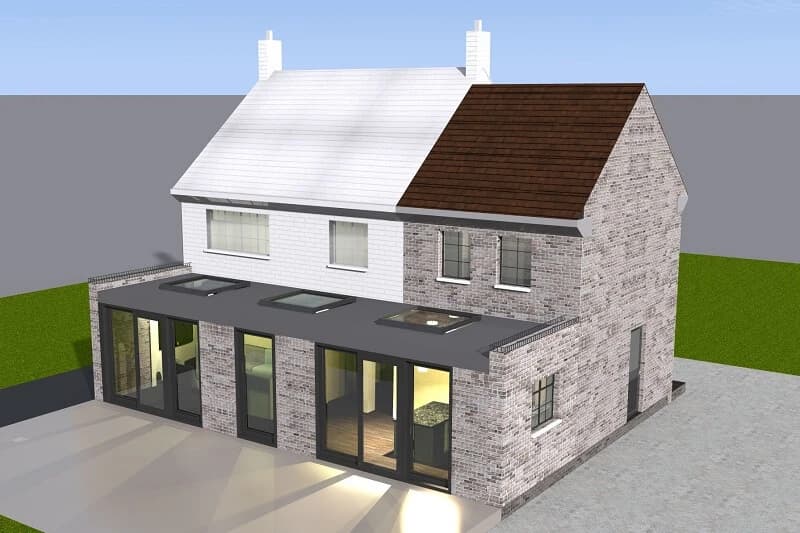
If you own a home in London, you have almost certainly asked yourself: is it worth extending, or should I simply move? With the average cost of moving in the capital now exceeding £25,000 once you factor in stamp duty, legal fees, and estate agent commissions, more homeowners than ever are choosing to invest in a house extension instead. The numbers make a compelling case. A well-designed home extension can add between 10% and 25% to the value of your property, and in certain London boroughs that translates to a six-figure uplift.
But not all extensions are created equal. The type of project you choose, the quality of the design, and even the borough you live in will dramatically affect your return. This guide breaks down exactly how much value a house extension, loft conversion, or basement conversion can add to a London property in 2026. We will walk you through real cost-versus-value data, explain which extension types deliver the strongest ROI, and share the design strategies that separate a profitable extension from an expensive mistake. Whether you are weighing up a modest side return or a full double-storey build, this is everything you need to make a confident, informed decision.
Why Extending Your London Home Beats Moving
London's property market has a way of making homeowners feel trapped. You love your neighbourhood, your children are settled in good schools, and your commute works. But the house itself has started to feel too small. The traditional answer was to sell and buy somewhere bigger, but the economics of that decision have shifted dramatically in recent years. Stamp duty alone on a £1 million London purchase is now £41,250, and that figure climbs steeply for higher-value properties. A £2 million home carries stamp duty of around £150,000. Add estate agent fees, solicitor costs, and the sheer upheaval of moving, and you are looking at an expense that could easily fund a transformative extension.
Research from Nationwide Building Society shows that home improvements which add floor area, such as an extension or loft conversion, can add up to 25% to a property's value. That is a percentage that has actually increased over the past decade, up from around 22% in their 2016 analysis. For a London home valued at £750,000, a 20% uplift represents £150,000 in added equity. When you compare that to the total cost of a well-executed extension, typically between £60,000 and £150,000 depending on scope, the financial logic becomes clear.
There is also an often-overlooked lifestyle dividend. Post-pandemic working patterns have made the home a more versatile space than ever. A dedicated home office, a larger kitchen that doubles as a social hub, or an additional bedroom with en-suite for guests or elderly relatives: these are not luxuries anymore. They are functional requirements that drive both your quality of life and your property's desirability on the open market. The smartest London homeowners are no longer asking whether to extend. They are asking which extension delivers the greatest value.
How Much Value Does a House Extension Actually Add?
The honest answer is: it depends. But let us put some concrete numbers around it. Nationwide's research on a typical three-bedroom house found that an extension incorporating a double bedroom and en-suite bathroom can increase the property's value by up to 23%. An additional bathroom alone can add approximately 6%, while an extra double bedroom contributes around 12% to 15%. These are national averages, and in London the absolute figures are significantly higher because the base property values are so much greater.
A survey by Zopa of 1,000 homeowners who had completed extension projects found that the average return on investment was 71%, with an average profit of £14,000 generated from an average spend of around £19,750. Those figures, however, reflect UK-wide averages. In London, where property values per square metre range from £5,000 in outer boroughs to well over £15,000 in prime central postcodes, the value added by each additional square metre of well-designed living space is substantially higher. Industry estimates suggest that London homeowners can expect to add between £2,500 and £5,000 per square metre of new floor space in terms of property value uplift, depending on the borough and the quality of the finish.
What the raw percentages do not capture is the compound effect over time. Property values in London have historically grown at a rate that outpaces the national average. An extension that adds £100,000 in value today will appreciate alongside the rest of the property, meaning the real return over a five or ten-year holding period is considerably greater than the initial uplift. This is why architects and property advisors increasingly view a well-designed extension not as an expense but as an investment in a appreciating asset.
Extension Types Compared: Value Added at a Glance
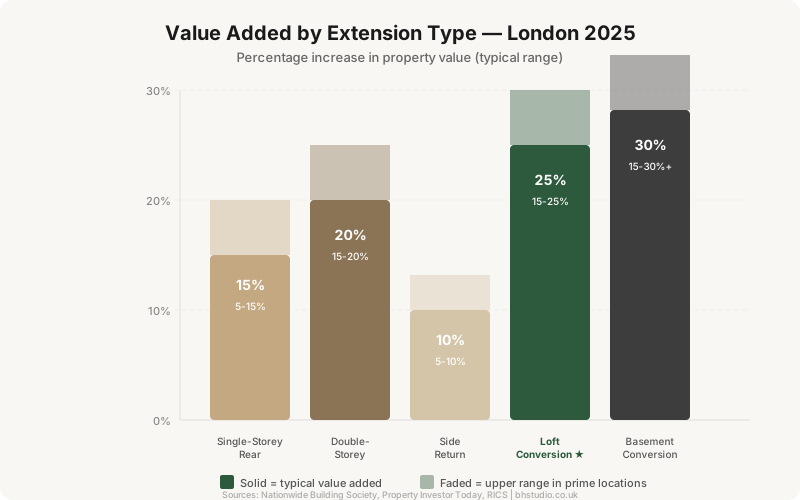
Not every extension will add the same proportion of value, and the right choice for your property depends on its existing layout, location, and the local market. Here is a summary of how the main extension types compare for London properties in 2026. A single-storey rear extension typically adds 5% to 15% to property value. A double-storey extension can deliver 15% to 20%. Side return extensions, while smaller in footprint, tend to punch above their weight at 5% to 10% because they transform otherwise wasted space. Loft conversions consistently rank as one of the highest-ROI projects, adding 15% to 25%. Basement conversions, though more expensive, can add 15% to 30% or more in prime locations where the value per square metre is at its highest.
The standout insight from the data is that extensions which add bedrooms and bathrooms tend to deliver stronger percentage returns than those which simply enlarge existing living areas. Estate agents value properties heavily on bedroom and bathroom counts, and additional rooms with distinct functions give buyers more reasons to pay a premium. This does not mean that a beautiful open-plan kitchen-diner is a bad investment. It absolutely is not, particularly in family-oriented London neighbourhoods. But if you are purely optimising for resale value, prioritising bedroom and bathroom additions will typically give you the strongest financial outcome.
Single-Storey Rear Extensions
The single-storey rear extension is the workhorse of London home improvement. It is the most common type of extension in the capital, and for good reason. It is relatively straightforward to build, often falls within permitted development rights, and can dramatically improve the way a family uses their ground floor. In 2026, London homeowners should expect to budget between £2,000 and £3,500 per square metre for a quality single-storey rear extension, with a typical 25 to 30 square metre project coming in at £60,000 to £105,000 including professional fees.
The value a rear extension adds depends heavily on how it is designed. A simple box extension that adds a few square metres to the kitchen will add modest value. But a thoughtfully designed extension that incorporates bi-fold or sliding doors opening onto the garden, rooflights flooding the space with natural light, and a seamless open-plan layout connecting kitchen, dining, and living areas can transform a property's appeal. This kind of design-led approach is where working with an experienced architect makes a measurable financial difference. Properties with architecturally considered extensions regularly achieve higher valuations than those with builder-led, off-the-shelf designs.
One design strategy that is particularly effective for London terraces and semi-detached homes is combining a rear extension with internal reconfiguration. Rather than simply adding space at the back, a good architect will look at the entire ground floor layout and find opportunities to remove redundant walls, improve circulation, and create a sense of flow that makes the whole house feel larger. This holistic approach often adds more value than the extension alone because it addresses one of the most common complaints buyers have about period London homes: cramped, disconnected rooms.
Double-Storey Extensions
If a single-storey extension is the workhorse, the double-storey extension is the heavy hitter. By building up as well as out, you effectively get two rooms for considerably less than twice the cost of one. The reason is straightforward: the most expensive elements of any extension are the foundations and the roof, and both are shared across two floors in a double-storey build. In London, a double-storey extension typically costs between £2,200 and £3,500 per square metre, and the added cost over a single-storey project of the same footprint is usually around 40% to 50% rather than 100%.
The value uplift can be significant. A double-storey extension that adds a larger kitchen-diner on the ground floor and an additional bedroom with en-suite above can increase a London property's value by 15% to 20%. On a home worth £800,000, that represents £120,000 to £160,000 in added value from a project that might cost £100,000 to £140,000 to build. The maths works particularly well for families who need both more living space and additional bedrooms, making this one of the strongest ROI extension types in the capital.
The main consideration with double-storey extensions is planning. They are more likely to require full planning permission than their single-storey equivalents, particularly in conservation areas or where the extension would overlook neighbouring properties. Building regulations around fire escape routes, structural loading, and party wall agreements also become more complex. This is precisely why engaging a qualified architect early in the process is so important. A well-prepared planning application with professional drawings dramatically increases your chances of approval and avoids the costly delays that come with refusals and resubmissions.
Side Return Extensions
The side return extension is a distinctly London phenomenon. If you own a Victorian or Edwardian terrace in the capital, you will almost certainly have a narrow alleyway running along one side of your ground floor, typically beside the kitchen. It is wasted space that adds nothing to your home's functionality, and reclaiming it can be transformative. A side return extension involves building over this passageway to widen the kitchen or create a more generous open-plan ground floor.
While the additional square meterage may be modest, often between 5 and 12 square metres, the impact on how the space feels and functions is disproportionately large. A dark, narrow galley kitchen becomes a wide, light-filled room. The cost per square metre for a side return extension in London tends to be higher than a standard rear extension, typically between £2,500 and £3,500 per square metre, because of the structural complexity involved in opening up a long section of load-bearing wall and managing drainage and boundary issues. However, the value uplift is strong because the improvement in usability is so dramatic.
Many London homeowners combine a side return extension with a rear extension to create an L-shaped or wraparound layout. This combined approach can be particularly effective because it addresses both the width and depth of the ground floor in a single project, delivering a transformation that would be difficult to achieve with either extension alone. For period terraces, which make up a huge proportion of London's housing stock, this combination is often the single most impactful improvement you can make to the property.
Loft Conversions: London's Best-Kept Value Secret
If there is one home improvement that consistently tops the charts for return on investment in London, it is the loft conversion. The numbers are striking. A well-executed loft conversion can add 15% to 25% to a London property's value, and in high-value areas the absolute uplift regularly exceeds £100,000. In prime postcodes, that figure can reach £200,000. The cost of achieving this is typically between £50,000 and £90,000 for a quality dormer conversion in the capital, making the ROI among the best of any home improvement project.
The reason loft conversions deliver such strong returns in London is simple: space is at a premium. Adding a bedroom with en-suite to the top of a three-bedroom terraced house elevates it into an entirely different price bracket. Estate agents consistently report that the jump from three bedrooms to four is one of the most valuable transitions in the London market, particularly in family-friendly neighbourhoods across South West, North, and East London. A four-bedroom home with two bathrooms appeals to a much wider pool of buyers than a three-bedroom, one-bathroom property, and this increased demand translates directly into a higher sale price.
The most common types of loft conversion for London properties are dormer conversions, which add a box-shaped structure projecting from the rear roof slope to maximise headroom, and Mansard conversions, which alter the entire rear roof profile. Dormer conversions are typically the most cost-effective option and can usually proceed under permitted development without a full planning application. Mansard conversions are more expensive but create significantly more usable space and are particularly popular in conservation areas where dormer designs may not be approved. Velux or rooflight-only conversions are the most affordable option but offer the least additional floor area.
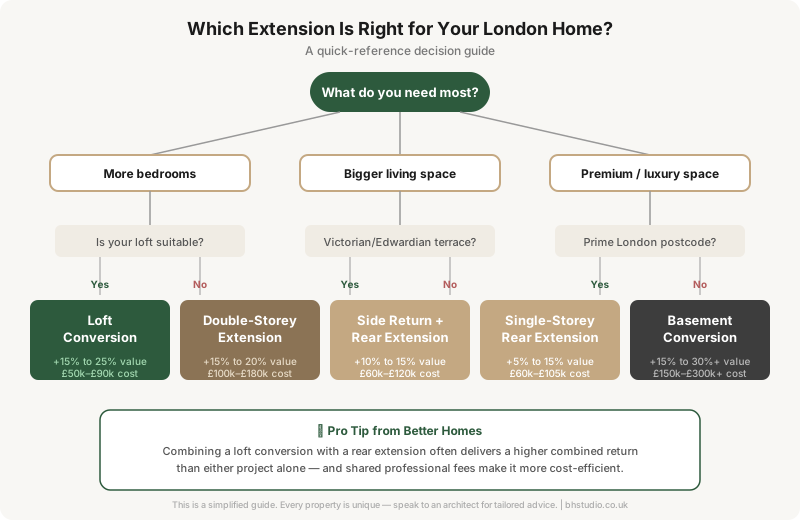
One insight that many London homeowners overlook is the power of combining a loft conversion with a rear extension. This dual approach addresses space needs at both ends of the house and can deliver a combined value uplift that exceeds what either project would achieve individually. The shared professional fees, scaffolding, and project management also make the combined cost more efficient than running two separate projects at different times.
Basement Conversions: Building Down in Prime London
In central and prime London, where extending outwards is often impossible and loft space may already be converted, homeowners are increasingly looking downwards. Basement conversions have become a significant feature of the high-end London property market, and the value they add can be extraordinary. In boroughs like Kensington and Chelsea, Camden, and Westminster, basements typically add between £8,500 and £19,000 per square metre to a property's value. For a 50 square metre basement, that represents an uplift of £425,000 to nearly £1 million in the most premium locations.
Of course, basement construction is also the most expensive type of home extension. A typical London basement conversion costs between £3,000 and £5,000 per square metre for shell and core works, with total budgets including fit-out usually ranging from £150,000 to £300,000 or more for a comprehensive project. The construction involves complex engineering including underpinning, excavation, waterproofing systems, and structural reinforcement, all of which require specialist contractors and careful project management. Party wall agreements with neighbours are almost always required, adding both cost and time to the process.
Despite the high costs, the ROI on basement conversions in prime London can be remarkable. Industry data suggests returns of 20% to 50% on investment in the most sought-after postcodes. The key is that basements in high-value areas create usable floor space where none existed before, and in postcodes where property values per square metre are already among the highest in the world, every additional square metre carries enormous value. Basements also offer versatility that other extensions cannot match: home cinemas, wine cellars, gyms, swimming pools, home offices, and guest suites are all popular uses that add both lifestyle value and market appeal.
Kitchen Extensions and the Open-Plan Premium
The kitchen has long been described as the heart of the home, and in London's competitive property market it is also one of the most financially valuable rooms. A well-designed kitchen extension that creates an open-plan kitchen, dining, and living space is consistently one of the most desirable features for London buyers. Estate agents report that properties with modern, open-plan kitchen-diners achieve faster sales and higher prices than comparable homes with separate, smaller rooms.
The value a kitchen extension adds depends on the quality of both the architectural design and the kitchen specification. A basic extension with a mid-range kitchen might add 5% to 10% to the property's value. But a beautifully designed space with high-quality fixtures, integrated appliances, natural stone worktops, and thoughtful details like under-cabinet lighting and a pantry can push that figure to 15% or more. The specification of the kitchen itself is crucial because it is one of the first things buyers assess when viewing a property, and a premium kitchen signals quality throughout.
For London homeowners, the open-plan kitchen extension also addresses one of the capital's most persistent housing challenges: the lack of social space in period properties. Victorian and Edwardian terraces were designed around separate, compartmentalised rooms that do not suit the way modern families live. Knocking through to create a single, generous ground-floor living space that connects seamlessly to the garden is not just a trend; it is a fundamental upgrade that reflects how people actually want to use their homes. This is why kitchen extensions remain one of the most popular and profitable home improvements in London, year after year.
Cost vs Value: What London Homeowners Should Budget
Understanding the true cost of an extension in London is essential for making a sound investment decision. In 2026, the average build cost for a house extension in the capital falls between £2,000 and £3,500 per square metre, depending on the specification and complexity. This places a standard 30 square metre single-storey extension at roughly £60,000 to £105,000 before professional fees, VAT, and finishes. London costs are typically 10% to 25% higher than the national average, driven by elevated labour rates, constrained site access in dense urban areas, and higher material delivery costs.
Professional fees are a significant but essential line item. Architect fees typically run between 5% and 12% of the construction cost, structural engineer fees range from £500 to £2,000, and planning application fees are £258 for a standard householder application. Party wall surveyor fees, if required, can add £1,500 to £3,000 per adjoining neighbour. The critical budget discipline is to include a contingency fund of 10% to 15% of the total build cost to cover unexpected issues, which are particularly common in older London properties where hidden structural challenges may emerge once work begins.
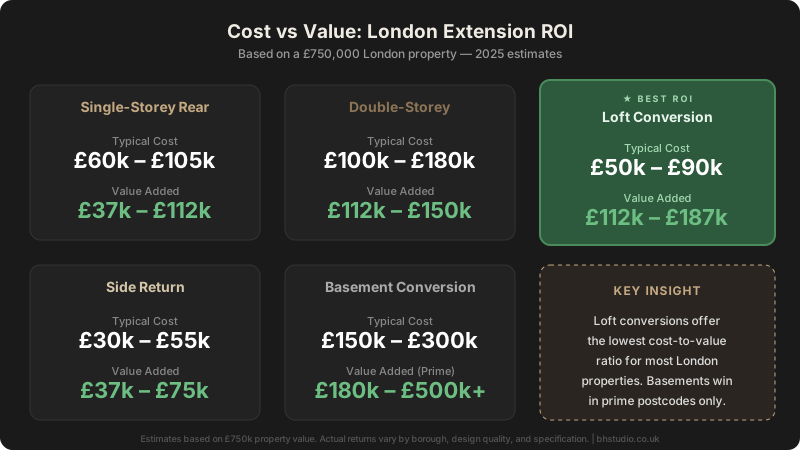
When you compare these costs against the value uplift data, the investment case for a well-planned extension is strong. A £100,000 extension on a £750,000 London home that delivers a 15% value increase adds £112,500 to the property's worth, generating an immediate net gain of £12,500 before you even account for the lifestyle benefits. Over five years of typical London property appreciation, that gain compounds further. The critical word in this analysis, however, is "well-planned." A poorly designed or badly executed extension can fail to deliver its potential value uplift, which is precisely why professional architectural input is not a cost but an investment in your project's financial performance.
Planning Permission and Permitted Development in London
Navigating planning requirements in London can feel daunting, but understanding the basics will save you time, money, and stress. Many home extensions in England can be built under permitted development rights without a full planning application. For single-storey rear extensions, permitted development allows up to 6 metres in depth for attached properties and 8 metres for detached houses, subject to a prior approval application under the larger home extension scheme. The extension must not exceed 4 metres in height, and it must not extend beyond the side elevation of the original house.
However, London is more complex than many other parts of the country. A significant number of properties in the capital sit within conservation areas, where permitted development rights are more restricted or may have been removed entirely through Article 4 Directions. Listed buildings require separate listed building consent for almost any alteration. Each borough also has its own supplementary planning documents that may impose additional requirements on design, materials, and scale. This is why checking with your local planning authority before assuming your project is covered by permitted development is so important.
Loft conversions can often proceed under permitted development, provided the additional volume does not exceed 40 cubic metres for terraced houses or 50 cubic metres for detached and semi-detached properties. The conversion must not raise the existing roof height, and materials should be similar in appearance to the existing house. Dormer windows facing a highway will typically require planning permission. For basement conversions, the situation is more nuanced. Internal-only conversions of existing cellars may not require planning permission, but any excavation work or changes to the external appearance of the property almost certainly will. Working with an architect who understands your specific borough's policies is the most reliable way to identify the correct consent route from the outset.
How to Maximise Your Extension's Return on Investment
The difference between an extension that delivers a strong financial return and one that merely breaks even often comes down to design decisions made before a single brick is laid. The first and most important step is understanding your local market. Speak with estate agents in your area to find out what buyers are looking for and what features command the highest premiums. In a family-oriented neighbourhood, an additional bedroom and bathroom will almost always outperform a home cinema. In an area popular with young professionals, a stunning open-plan kitchen-diner with seamless indoor-outdoor flow may be the feature that drives offers above the asking price.
Quality of design matters enormously. A well-proportioned, light-filled space with considered details and a coherent relationship to the existing house will always outperform a purely functional box extension. This is not about spending more on exotic materials. It is about making intelligent choices: positioning rooflights where they will catch the afternoon sun, choosing glazing proportions that frame views of the garden, and selecting finishes that complement the character of the original property rather than fighting against it. These design decisions cost very little extra to make but can add tens of thousands of pounds to the perceived value of the finished space.
Another often-overlooked strategy is future-proofing your extension. Incorporating elements like underfloor heating, excellent insulation, smart home wiring, and provisions for electric vehicle charging adds relatively modest cost during construction but signals quality and modernity to future buyers. Properties with strong energy efficiency ratings are increasingly commanding premiums in the London market, and an extension is the perfect opportunity to upgrade the thermal performance of your home while you are already undertaking significant building work.
Energy Efficiency: The Hidden Value Driver
Energy performance is rapidly becoming one of the most important factors in property valuation, and an extension project offers a unique opportunity to dramatically improve your home's efficiency. Current building regulations require new extensions to meet minimum insulation standards with U-values of 0.15 W/m²K for roofs, which far exceed the performance of most existing London housing stock. This means that every extension automatically improves the overall energy performance of the building.
Savvy London homeowners are going further, using the extension as a catalyst to upgrade the entire property. Upgrading from double to triple glazing throughout, installing a high-efficiency heating system or heat pump, and adding insulation to existing walls and floors during the disruption of building work can shift a property's EPC rating from D or E up to B or even A. The government's target of updating homes to a minimum EPC rating of C by 2035 means that properties with poor energy performance are likely to face increasing challenges in the market, while those that are already efficient will command growing premiums.
The financial benefit of energy efficiency is twofold. First, buyers are willing to pay more for homes with lower running costs, and this premium is increasing as energy prices remain volatile. Second, properties with strong EPC ratings avoid the risk of future regulatory requirements that might force expensive retrofitting. For London homeowners who plan to hold their property for the medium to long term, investing in energy efficiency during an extension project is one of the smartest financial decisions you can make.
The Ceiling Price: When an Extension Won't Add Value
There is an important caveat to everything we have discussed so far. Every street and every neighbourhood has a ceiling price: the maximum amount that buyers will pay for a property in that location, regardless of how many improvements have been made. If your home is already at or near the ceiling price for your area, an expensive extension may not generate the financial return you are hoping for.
This does not mean the extension has no value. It will still improve your quality of life and make the property more attractive to a wider pool of buyers, potentially leading to a faster sale. But from a purely financial perspective, you need to ensure that the post-extension value of your home does not significantly exceed what the market will support. A conversation with two or three local estate agents before committing to a project will give you a realistic sense of where the ceiling lies for your street and what type of improvements are most likely to push your property's value towards it.
The flip side of this principle is equally important. If you own one of the less expensive properties on a desirable street, the potential for value uplift through an extension is at its greatest. The classic property investment advice of buying the worst house on the best street applies directly here. Bringing an under-improved property up to the standard of its neighbours through a well-designed extension can generate returns that far exceed the averages we have discussed, precisely because there is so much headroom between the current value and the ceiling.
Financing Your Home Extension
For most London homeowners, a major extension represents a significant financial commitment, and choosing the right funding strategy can make a meaningful difference to the overall cost and feasibility of the project. The most common option is remortgaging to release equity from the property. Data from the LMS Monthly Remortgage Snapshot showed that in early 2026, 47% of people who remortgaged increased their loan size, with an average equity release of just over £20,000. For larger extension projects, releasing equity through a remortgage typically offers the most competitive interest rates because the borrowing is secured against the property.
Alternatively, a specialist home improvement loan or bridging loan may be appropriate for homeowners who do not wish to disrupt an existing favourable mortgage deal. Some lenders offer staged drawdown facilities specifically designed for construction projects, releasing funds at agreed milestones as the work progresses. This approach aligns your borrowing with actual expenditure and avoids paying interest on the full loan amount before it is needed. Whichever route you choose, it is worth speaking to an independent mortgage advisor who can assess your options across the whole market and help you structure the financing in the most cost-effective way.
The key financial discipline is to ensure that your total project cost, including build, fees, contingency, and financing costs, still makes sense against the expected value uplift. A project that costs £120,000 to deliver but adds £150,000 in value to your property is a sound investment even after accounting for borrowing costs. Running these numbers with realistic assumptions before committing to a project is essential, and it is a conversation that your architect, your estate agent, and your financial advisor should all contribute to.
Quick Takeaways
A well-designed house extension can add 10% to 25% to the value of a London property, with loft conversions and double-storey extensions typically delivering the strongest returns. Loft conversions are the standout performer, adding 15% to 25% in value for a build cost that is often lower than a ground-floor extension. In prime London postcodes, basement conversions can generate ROI of 20% to 50%, though they require significantly higher upfront investment. The jump from three bedrooms to four is one of the most valuable transitions in the London market, so extensions that add a bedroom and bathroom tend to outperform those that simply enlarge living areas. Build costs in London range from £2,000 to £3,500 per square metre, with total project costs for a typical extension between £60,000 and £150,000 including fees. Always check your local ceiling price before committing: your post-extension home value should not significantly exceed what the market will support in your area. Working with a qualified architect is not an expense but an investment, as design quality directly correlates with the financial return your extension delivers.
Making the Right Decision for Your London Home
The question of how much value a house extension adds is ultimately a question about design quality, strategic thinking, and understanding your local market. The data is clear: the right extension, well-designed and well-executed, is one of the strongest financial investments a London homeowner can make. It adds tangible value to your property, improves your daily quality of life, and avoids the enormous expense and disruption of moving.
The critical success factor is getting the design right from the start. An experienced architect does not just draw plans; they understand how space, light, proportion, and materials combine to create rooms that people want to live in and are willing to pay a premium for. They navigate planning requirements, manage the complexities of building in a dense urban environment, and make design decisions that directly translate into higher property valuations. This is the difference between an extension that merely adds square metres and one that genuinely transforms both how your home feels and what it is worth.
At Better Homes, we specialise in designing extensions, loft conversions, and renovation projects for London homeowners. Every project we take on is guided by a commitment to design excellence and a clear understanding of how good architecture adds measurable value. If you are considering extending your home and want to understand what is possible for your property, we would love to hear from you. Get in touch to book a consultation and take the first step towards unlocking your home's full potential.
Frequently Asked Questions
How much value does a single-storey extension add to a London house?
A single-storey rear extension typically adds between 5% and 15% to the value of a London property, depending on the quality of the design, the specification of the finishes, and the location. For a home valued at £700,000, this represents an uplift of £35,000 to £105,000. Extensions that create open-plan kitchen-dining-living spaces tend to deliver the strongest returns because this layout is in very high demand among London buyers.
Is a loft conversion or a rear extension better value for money?
In most cases, a loft conversion delivers a higher percentage return on investment than a rear extension. Loft conversions typically add 15% to 25% to a London property's value, compared to 5% to 15% for a single-storey rear extension. This is because loft conversions add bedrooms and bathrooms, which are the features estate agents weight most heavily in valuations. However, the best choice depends on your property's specific layout and your family's needs.
Do I need planning permission for a house extension in London?
Many house extensions in London can be built under permitted development rights without a full planning application. Single-storey rear extensions of up to 6 metres for attached houses or 8 metres for detached houses may qualify, subject to prior approval. However, properties in conservation areas, listed buildings, and those affected by Article 4 Directions have more restricted rights. Checking with your local borough planning department or engaging an architect to assess your specific situation is always advisable.
How much does a loft conversion cost in London in 2026?
Loft conversion costs in London typically range from £50,000 to £90,000 excluding VAT and professional fees, depending on the size and type of conversion. A basic Velux conversion may start at around £30,000 to £40,000, while a full dormer conversion usually falls between £50,000 and £70,000. Mansard conversions, which are more complex, can cost £70,000 to £100,000 or more. Inner London boroughs tend to have higher build costs due to access constraints and elevated labour rates.
What is the ceiling price and why does it matter for extensions?
The ceiling price is the maximum amount buyers will pay for a property in a specific area, regardless of improvements. If your home is already near this ceiling, an expensive extension may not deliver the full financial return because buyers will not pay above what the neighbourhood supports. Always consult local estate agents to understand where the ceiling sits for your street before committing to a project, and focus your investment where there is genuine headroom for value growth.
Can a poorly designed extension reduce my property's value?
While it is rare for any extension to reduce a property's overall value, a poorly designed or badly built extension can certainly fail to deliver the expected uplift and may make the property harder to sell. Common mistakes include blocking natural light to existing rooms, creating awkward layouts, using cheap materials that clash with the original building, and failing to comply with building regulations. This is why investing in professional architectural design is so important: it protects your investment and ensures the extension adds genuine, lasting value.
How long does a typical house extension take to build in London?
A standard single-storey rear extension in London typically takes 10 to 16 weeks to build once work begins on site. A double-storey extension may take 14 to 24 weeks. Loft conversions usually complete in 8 to 12 weeks. However, the total project timeline from initial design through to completion is considerably longer when you include the design phase, planning applications, building control approval, party wall agreements, and contractor procurement. A realistic timeline from first architectural consultation to moving back into the finished space is usually 6 to 12 months for a typical project.
We'd Love to Hear From You
Are you planning an extension, loft conversion, or renovation project for your London home? We would love to hear about your plans and the questions you are grappling with. Drop us a message or leave a comment below sharing what type of extension you are considering and what is most important to you: is it maximising resale value, creating a dream kitchen, adding a bedroom for your growing family, or something else entirely? Your experiences and questions help us create even more useful content for London homeowners, and we genuinely enjoy hearing about the projects our readers are planning. If you found this guide helpful, please share it with friends or neighbours who are considering their own extension. The more informed London homeowners are about the value their properties can unlock, the better decisions everyone makes.
References and Sources
- Nationwide Building Society – "What Adds Value to Your Home" research report (2023). Analysis of how home improvements including extensions and loft conversions affect property values across different property types. nationwide.co.uk.
- Royal Institution of Chartered Surveyors (RICS) – Guidance on residential property valuations and the impact of extensions on market value. RICS provides the professional standards used by surveyors when assessing property values across the UK. rics.org.
- HomeOwners Alliance and Federation of Master Builders – "House Extension Costs" guide (2026). Comprehensive breakdown of extension costs by type and region, including London-specific pricing data and guidance on finding vetted builders. hoa.org.uk.
- UK Government Planning Portal – Guidance on permitted development rights for householder extensions, including single-storey, double-storey, and loft conversion rules. Essential reading for understanding what you can build without a full planning application. planningportal.co.uk.
- Property Investor Today – "Maximizing ROI on London Loft Conversions" (May 2026). Analysis of loft conversion returns across inner and outer London boroughs, with case studies and cost-versus-value breakdowns. propertyinvestortoday.co.uk.
Plan your project
Apply the guidance to your home.
Explore the scope and investment for your extension, then discuss the work your home needs. See our London service areas for local project information.