 Better Homes
House extension · Home renovation
15 house extension mistakes London homeowners make
Avoid costly house extension, loft conversion and home renovation mistakes with a practical London-focused guide on budgets, planning, builders and design pitfalls.
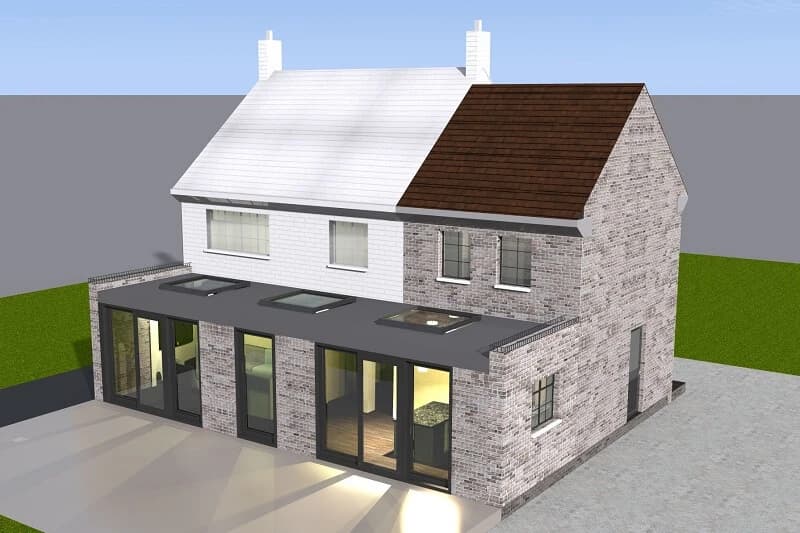
15 House Extension Mistakes London Homeowners Make
Why This Matters for London Homeowners
A house extension or home renovation in London is one of the largest financial commitments you will ever make outside of buying the property itself. With average extension costs in the capital running between £3,000 and £5,000 per square metre – and full home renovation budgets regularly exceeding £150,000 – the margin for error is razor thin.
Yet every year, thousands of London homeowners fall into the same avoidable traps. They underestimate costs, skip critical approvals, hire the wrong team, or design spaces that look beautiful on paper but fail in daily life. The result is delayed timelines, blown budgets, and extensions that add less value than they should.
This guide draws on current industry data and expert insight to walk you through the fifteen biggest mistakes people make when extending or renovating their homes – and, more importantly, how to sidestep every single one. Whether you are planning a rear kitchen extension in Hackney, a loft conversion in Wandsworth, or a full home renovation in Islington, what follows could save you tens of thousands of pounds and months of unnecessary stress.
1. Not Setting a Realistic Budget from Day One
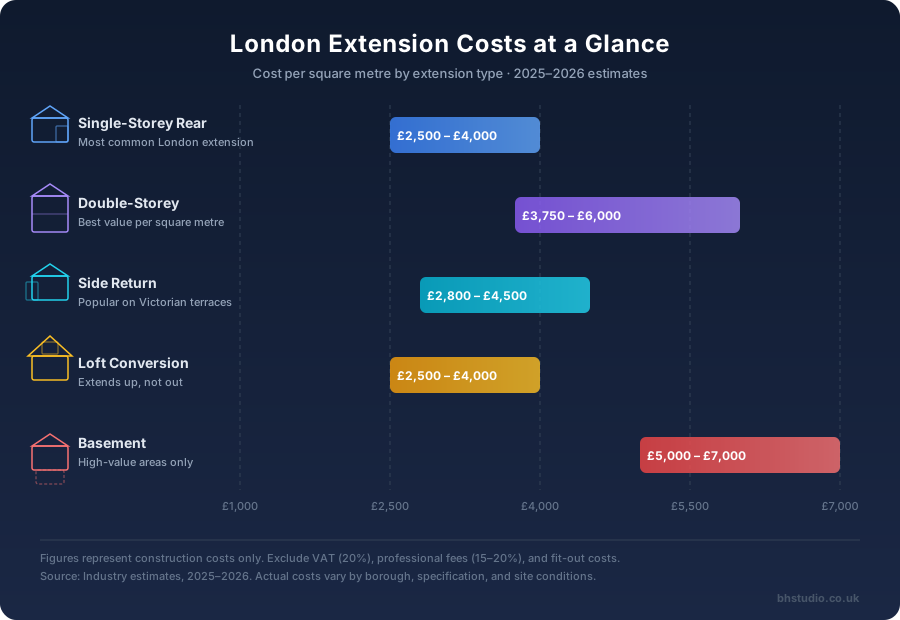
The single most common home extension mistake is starting with a number pulled from thin air – or worse, from a vague online average that bears no resemblance to London pricing. National cost guides often quote extension rates of £1,800 to £3,000 per square metre, but those figures rarely account for the capital's premium on labour, materials delivery, and restricted site access that push costs significantly higher.
In London, a single-storey rear extension typically costs between £2,500 and £4,000 per square metre for the shell and basic finishes alone. A double-storey extension adds roughly 50 to 60 per cent on top. Factor in a kitchen fit-out, and you could be looking at an additional £15,000 to £40,000 depending on your specification. These are construction costs only – they exclude VAT at 20 per cent and professional fees that typically add another 15 to 20 per cent.
The fix is straightforward but requires discipline. Before you commission any design work, spend time understanding current London build costs for your specific borough. Speak to at least two architectural practices for ballpark estimates, and build your budget from the ground up. Include every line item – from structural engineering fees and party wall surveyor costs to skip hire and temporary accommodation if you cannot live on site during the build.
We see this constantly at Better Homes: homeowners who arrive with a £60,000 budget for a project that realistically needs £90,000 to £100,000. It is far better to right-size your expectations early than to run out of money mid-build and end up compromising on the very features that prompted the project in the first place.

The Contingency Fund Most People Forget
Every experienced architect and project manager will tell you the same thing: set aside a contingency of at least 10 to 15 per cent of your total project cost. For extensions involving older London properties – Victorian terraces, Edwardian semis, Georgian townhouses – you should push that contingency closer to 20 per cent. These properties are full of surprises: inadequate foundations, hidden asbestos, rotten timbers, and non-standard construction that only reveals itself once the walls are opened up.
A contingency fund is not money you plan to spend. It is insurance against the unknown. If you reach the end of your project without touching it, congratulations – you have a healthy budget left over for furnishing your new space. But if your builder discovers that your Victorian rear wall has no proper foundation and needs underpinning, you will be extremely glad that buffer exists.
2. Skipping Professional Advice at the Planning Stage
One of the most damaging home renovation mistakes is bringing in professionals too late – or not bringing them in at all. Some homeowners try to save money by drawing up their own plans, going straight to a builder, or treating the architect as a luxury rather than a necessity. This approach almost always costs more in the long run.
A RIBA-chartered architect does far more than draw pretty pictures. They assess the feasibility of your project against local planning policy, identify structural constraints before they become expensive problems, and produce the detailed drawings that allow builders to provide accurate, comparable quotes. Without proper drawings, builder quotes are essentially guesswork – and guesswork leads to variations, disputes, and ballooning costs once the project is underway.
In London specifically, the interplay between permitted development rights, borough-specific planning policies, conservation area restrictions, and building regulations is complex enough to trip up even experienced developers. An architect who knows your borough will understand what is likely to be approved, what will be refused, and how to design within those constraints while still delivering the space you need.
Equally important is engaging a structural engineer early. Extensions require calculations for steel beams, foundation design, and load paths. If these are done as an afterthought, the builder may need to pause work while they wait for engineering details – and every week of delay on a London building site costs money.
Why Hiring an Architect First Saves You Thousands
Think of it this way: your architect is the person who translates your vision into a buildable, compliant design. They can suggest alternative approaches that you would never have considered – perhaps reorganising existing rooms rather than building out, or combining a small rear extension with a loft conversion to get more space for less money.
Professional fees for a full architectural service typically run 10 to 12 per cent of the construction cost. On a £100,000 extension, that is £10,000 to £12,000. But the savings they deliver through smarter design, accurate tender documents, and proper contract administration routinely exceed that figure several times over. At Better Homes, we have seen projects where early architectural intervention saved the client 15 to 25 per cent compared to their original concept – simply by rethinking the approach.
3. Ignoring Planning Permission and Permitted Development Rules
According to UK Government planning statistics, householder applications – which include home extensions – make up over half of all planning decisions in England. Many of those applications are refused, and a significant proportion of refusals stem from homeowners misunderstanding what they are allowed to build.
Permitted development rights allow certain types of house extension to proceed without a full planning application, provided strict size, height, and design criteria are met. For a detached house, you may be able to extend up to eight metres to the rear under the prior approval process. For a semi-detached or terraced property, the limit is six metres. But these allowances come with a long list of conditions relating to ridge height, eaves height, materials, proximity to boundaries, and the percentage of the original plot that can be covered by buildings.
The danger lies in assumption. Too many homeowners assume their project falls under permitted development without verifying it. If you proceed without the correct approval and your local authority later discovers the breach, you can face enforcement action – including a requirement to demolish the extension at your own expense. Even if enforcement does not follow immediately, an unapproved extension will create serious problems when you come to sell the property.
The safest approach is to apply for a lawful development certificate before starting work. This costs around £103 and provides formal confirmation from your council that the proposed works are lawful. It is a small price to pay for certainty and peace of mind.
Conservation Areas and Listed Buildings in London
London has more conservation areas than any other city in the United Kingdom. If your property falls within one – and many do, particularly in boroughs like Camden, Westminster, Islington, Richmond, and Greenwich – your permitted development rights are significantly restricted. Side extensions, rear dormers, and changes to front elevations that would be fine elsewhere may require a full planning application in a conservation area.
Listed buildings introduce an even higher level of scrutiny. Any alteration that affects the character of a listed building requires listed building consent, which is separate from planning permission and carries its own criteria. Even internal changes – removing an original fireplace, for example – can require consent if the building is listed.
If you own a property in a London conservation area or a listed building, engaging a planning consultant or architect with specific experience in heritage projects is not optional. It is essential. The wrong approach can waste months of time and thousands of pounds in application fees, specialist reports, and redesign costs.
4. Overlooking Building Regulations
Planning permission and building regulations are two entirely separate systems, and confusing them is one of the most expensive mistakes a homeowner can make. Planning permission controls whether you can build. Building regulations control how you build. Even if your extension falls under permitted development and requires no planning application, you will almost certainly need building regulations approval.
Building regulations cover structural integrity, fire safety, thermal performance, ventilation, drainage, and electrical safety. A building control inspector will need to visit at key stages of the construction – typically at foundation level, damp-proof course, pre-plaster, and final completion – to sign off each element. Skipping this process or cutting corners means you will not receive a completion certificate, which creates a serious liability when selling or remortgaging.
The consequences of non-compliance go beyond paperwork. Poorly insulated extensions waste energy and feel uncomfortable to live in. Inadequate fire protection in a loft conversion can endanger your family. Sub-standard drainage can lead to flooding and subsidence. Building regulations exist for good reason, and treating them as a box-ticking exercise rather than a quality framework is a mistake that London homeowners cannot afford to make.
Work with your architect or design team to produce a full building regulations package – detailed technical drawings that your builder can follow precisely. This upfront investment in documentation pays for itself many times over by reducing errors, rework, and failed inspections during construction.
5. Forgetting About the Party Wall Act
If you live in a terraced or semi-detached house in London – which the vast majority of London homeowners do – there is a strong chance your extension project will trigger the Party Wall etc. Act 1996. This applies whenever you are building on or near a shared boundary wall, excavating within three metres of an adjoining property's foundation, or excavating within six metres if your foundations go deeper than your neighbour's.
The Act requires you to serve formal notice on affected neighbours at least two months before construction begins. If your neighbour consents in writing, you can proceed without appointing surveyors. If they dissent – or simply fail to respond – you will need to appoint party wall surveyors to prepare an award that protects both parties. This process can take weeks and cost anywhere from £1,000 to £3,000 per neighbour depending on complexity.
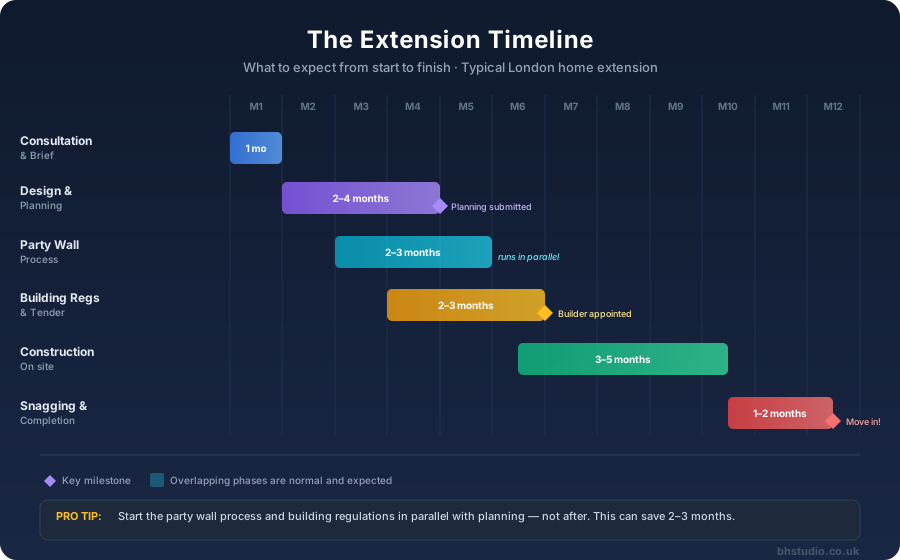
The mistake most people make is not ignoring the Party Wall Act entirely – that is relatively rare – but rather leaving it too late. Serving notice at the last minute can delay your start date by months if neighbours are slow to respond or decide to dissent. Begin the party wall process as soon as your design is sufficiently developed, ideally while you are still finalising planning or building regulations. That way, the party wall award is in place by the time your builder is ready to break ground.
Neighbour relationships matter enormously on London's tightly packed residential streets. A polite conversation before the formal notice goes out can make the entire process smoother. Explain what you are planning, show them the drawings, and reassure them that you are following the legal process. A little diplomacy goes a long way toward preventing disputes that can derail even the best-planned extension.
6. Choosing the Wrong Builder or Contractor
Your home extension is only as good as the people who build it. Yet choosing a builder is where many London homeowners make their most consequential mistake – often by selecting the cheapest quote or the first name recommended by a friend without carrying out proper due diligence.
A low quote should be treated with caution rather than celebration. Builders who underquote typically make their money back through variations – additional charges for work that was either poorly scoped or deliberately excluded from the original price. By the time you realise what is happening, the project is half-built and you have no realistic option but to pay up.
Equally problematic is hiring a builder before your designs and approvals are fully in place. Without complete tender drawings, builders cannot give you a fixed price because they do not know exactly what they are building. This leads to provisional sums, estimates, and open-ended contracts that leave you exposed to cost overruns. A well-organised project moves from design to approval to tender, ensuring that builders can price against a complete and unambiguous set of drawings.
Look for builders who are willing to work from detailed architectural drawings, who provide itemised quotes rather than a single lump sum, who carry adequate insurance, and who can provide verifiable references from recent London projects of a similar scale. Membership of recognised trade bodies – the Federation of Master Builders, TrustMark, or the Chartered Institute of Building – is a useful indicator of professionalism, though it should not replace your own checks.
How to Vet a Builder Properly
Get a minimum of three detailed, like-for-like quotes based on the same set of tender drawings. Visit at least one completed project by each shortlisted builder – ideally a home extension in London that is comparable in size and complexity to yours. Speak to previous clients about the builder's communication, timekeeping, quality of finish, and how they handled unexpected problems.
Before signing any contract, verify that the builder has public liability insurance and employer's liability insurance. Check whether they are VAT registered – an unregistered builder might seem cheaper, but it raises questions about the scale and legitimacy of their operation. Finally, insist on a proper written contract that includes a fixed price, a programme of works with milestones, a clear payment schedule linked to completed stages, a defects liability period, and provisions for delay and dispute resolution.
7. Poor Design That Kills Natural Light and Flow
An extension that makes your home bigger but darker, more disjointed, or harder to navigate is an extension that has failed. Yet this is exactly what happens when design is treated as secondary to size. Too many homeowners focus on maximising square footage without considering how the new space will connect to the existing house, where natural light will come from, and how the overall layout will function for daily life.
Light is the single most underestimated element in home extension design. A deep rear extension can plunge the middle of your home into permanent shadow if it is not designed with glazing strategy in mind. Rooflights, clerestory windows, glass doors, and internal glazed partitions are not luxuries – they are essential tools for ensuring that your entire home benefits from the extension, not just the new room itself.
Flow is equally critical. Think about how you move through your home on a typical day: from the front door to the kitchen, from the kitchen to the garden, from the living room to the stairs. A well-designed extension enhances these movement patterns. A poorly designed one interrupts them, creating awkward corridors, dead-end rooms, or spaces that only function if you walk through another room to reach them.
The best London extensions feel as though they have always been part of the house. Achieving that requires thinking about the whole property – not just the new addition – and designing from the inside out rather than the outside in.
The Side Return Trap: A London-Specific Pitfall
Side return extensions are enormously popular in London, particularly on Victorian and Edwardian terraced houses where a narrow alleyway runs along one side of the kitchen. Filling in this space to create a wider, open-plan kitchen-diner is one of the most common extension projects in the capital.
The trap is assuming that a side return extension is simple because it is small. In reality, these projects often involve removing a load-bearing wall, installing a substantial steel beam, rerouting drainage that runs under the side return, and managing the transition between the new flat roof and the existing pitched roof. The construction cost per square metre for a side return can be surprisingly high because you are paying for complex structural and waterproofing work in a compact footprint.
Furthermore, a side return extension that is poorly detailed can create a dark, narrow extension with a single rooflight that does little to compensate for the loss of the side window. The best side return designs combine full-width rooflights, carefully positioned glazing, and a considered floor plan that makes the new space feel generous rather than merely functional.
8. Not Thinking Big Enough – or Thinking Too Big
There is a bittersweet irony in home extension projects: the homeowners who build too small often regret it within two years, while those who build too big find that the extension costs more than the value it adds. Getting the size right is a balancing act that requires you to think beyond your immediate needs.
A common regret among homeowners is not extending far enough when they had the opportunity. The marginal cost of adding an extra metre or two to an extension is relatively small compared to the overall project cost – you are already paying for foundations, a roof, and professional fees. That additional space might mean the difference between a kitchen that feels adequate and one that genuinely transforms how your family lives.
On the other hand, over-extending can be a financial mistake if it pushes your property value above the ceiling price for your street. In London, where property values vary enormously from one postcode to the next, it is important to understand what the market will bear. A four-bedroom house on a street of three-bedroom terraces will add value, but a six-bedroom mansion on the same street may not recoup its costs. Speak to a local estate agent before you finalise your design to understand the realistic uplift in value your extension will deliver.
The sweet spot is an extension that meets your needs for the next ten to fifteen years while remaining proportionate to the character and value of neighbouring properties. Think about how your household will evolve: children growing into teenagers who need their own space, the possibility of working from home permanently, or ageing parents who may need a ground-floor bedroom. Designing for these scenarios now is far cheaper than adding them later.
9. Loft Conversion Blunders
A loft conversion is often described as the most cost-effective way to add space to a London home. Costs typically range from £55,000 to £120,000 depending on the type of conversion and the level of finish, and the value added can be substantial – particularly if the conversion creates an additional bedroom with en suite bathroom. But loft conversions come with their own set of pitfalls that are distinct from ground-floor extensions.
The most fundamental mistake is failing to check whether your loft is actually suitable for conversion before committing time and money to the project. Not all lofts can be converted. The minimum usable headroom is around 2.2 metres from finished floor to ridge, though 2.4 metres is far more comfortable. You also need to account for the depth of floor insulation and finished floor build-up, which can eat into available headroom. If your loft falls short, options like a dormer or mansard conversion can increase headroom, but they add significantly to cost and may require planning permission.
Roof structure is another critical factor. Many post-1960s houses use trussed rafter roofs, where the timber framework criss-crosses the loft space and cannot simply be removed. Converting a trussed roof is possible but requires specialist structural engineering and is considerably more expensive than converting a traditional cut-roof with simple rafters and purlins.
Headroom, Staircases, and Fire Safety
The staircase is where many loft conversion projects go wrong. A poorly positioned staircase can eat into the floor below, destroying bedroom space or creating an awkward layout that disrupts the flow of the entire house. Ideally, the new loft stairs should rise above the existing staircase so that you are not sacrificing valuable floor space on the level below. This requires careful early-stage design work – not an afterthought once the dormer is already built.
Fire safety in loft conversions is governed by strict building regulations, and misunderstanding them is a mistake that can have genuinely dangerous consequences. When you convert a loft into habitable space, you are adding a third storey to your home, which triggers requirements for protected escape routes, fire doors to every habitable room opening onto the staircase, interlinked mains-wired smoke and heat alarms, and in some cases fire-resistant glazing. These are not negotiable and should be incorporated into the design from the outset.
Soundproofing is the final loft conversion detail that homeowners frequently overlook. Without proper acoustic insulation between the loft floor and the rooms below, every footstep, conversation, and creaky floorboard will transmit through the house. Specifying the right floor build-up – resilient bars, acoustic mineral wool, and an independent ceiling – is far easier and cheaper to do during construction than to retrofit after the fact.
10. Underestimating the Timeline
A common expectation among London homeowners is that their extension will be finished in a few weeks. The reality is that a well-managed single-storey extension typically takes three to six months on site, and the total project timeline – from initial design through to moving your furniture into the completed space – can be twelve months or more when you factor in design development, planning and building regulations applications, party wall agreements, and tender periods.
Rushing any part of this process is counterproductive. Compressed design timelines lead to incomplete drawings, which lead to builder queries on site, which lead to delays and variations. Skipping the tender period in favour of going with the first available builder often means overpaying or under-specifying. And starting construction before all approvals are in place is a gamble that can result in stop-work notices and costly redesign.
Build a realistic programme at the outset with your architect and builder. Include buffer time for weather delays, material lead times, and the inevitable minor hiccups that occur on every building project. If your builder tells you a 30-square-metre rear extension will be done in eight weeks, treat that claim with healthy scepticism. The best builders are honest about timelines precisely because they know how many variables are involved.
For homeowners planning to live on site during construction, timeline realism is doubly important. Three months of building work is manageable with some patience and organisation. Six months of dust, noise, and no kitchen is a different proposition entirely. Have a clear conversation with your builder about phasing – which rooms will be out of commission and when – so you can plan your life accordingly.
11. Neglecting Energy Efficiency and Insulation
Building regulations set minimum standards for thermal performance in new extensions, but minimum standards are exactly that – the bare minimum. In a city where energy costs have risen sharply and environmental awareness is increasing, building to a higher standard than the minimum is both financially and ethically sensible.
A well-insulated extension with high-performance glazing, airtight construction, and properly designed heating will cost less to run every year for decades. The upfront cost difference between a minimum-compliance extension and one built to a genuinely comfortable thermal standard is often only five to ten per cent of the total build cost – a premium that pays for itself within a few years through reduced energy bills.
The mistake most people make is treating insulation as an invisible commodity – something that gets buried in the walls and forgotten about. In reality, the quality of your insulation, the continuity of your airtightness layer, and the performance of your windows and doors will determine whether your new extension feels warm and cosy on a January evening or draughty and expensive to heat.
If you are extending a Victorian or Edwardian house, consider whether this is the right moment to address insulation in the existing building as well. Connecting a well-insulated new extension to a poorly insulated original house can create uncomfortable temperature differences between rooms. Upgrading the existing walls, floors, or roof at the same time as building the extension can be significantly more cost-effective than tackling them as a separate project later.
12. Failing to Consider How You Actually Live
It is easy to get seduced by glossy design magazines and Instagram interiors that prioritise aesthetics over practicality. But a home extension exists to serve your life – not the other way around. The best designs start with an honest conversation about how you and your household actually use your home on a daily basis, not how you wish you used it.
Where do you eat most of your meals? Where do the children do homework? Where do you work from home? Where does the dog sleep? Where do you dump your keys, coats, and bags when you walk through the front door? These mundane questions are the foundation of good residential design, and ignoring them is a surprisingly common home renovation mistake.
Storage is a prime example. London homes are typically compact, and the need for storage only grows over time. Yet many extension designs maximise open floor space at the expense of cupboards, utility rooms, and built-in storage. The result is a beautiful new kitchen-diner that is permanently cluttered because there is nowhere to put anything. Think hard about where your possessions will live, and design storage into the project from the start – not as an afterthought.
Similarly, think about the relationship between indoor and outdoor space. London gardens are precious, and a rear extension that consumes your entire garden may give you a bigger kitchen but leave you with no usable outdoor area. The best projects strike a balance between interior space and garden, often using large glazed doors to blur the boundary between inside and outside.
13. Not Getting Multiple Quotes
Industry surveys consistently find that a large proportion of homeowners rely on a single builder quote before committing to a project. This is a significant mistake. Without at least three detailed, like-for-like quotations based on the same set of drawings, you have no way of knowing whether you are paying a fair price.
The key word is like-for-like. Three quotes are only useful if they are pricing the same scope of work to the same specification. This is why having complete tender drawings before you approach builders is so important – it removes ambiguity and gives you a genuine basis for comparison. If one quote is significantly lower than the others, it almost certainly means something has been excluded or underestimated. If one is significantly higher, it may reflect the builder's current workload rather than a quality premium.
Beyond the headline price, compare what each quote includes. Does it cover building control fees? Is scaffolding included? What about waste removal, temporary works, and making good to existing areas? A cheap quote that excludes key items can end up costing more than a higher quote that covers everything. Read the small print, ask questions, and do not be afraid to go back for clarification.
14. Forgetting the Finishing Touches Until It Is Too Late
There is a pattern that plays out on home renovation projects with depressing regularity: the homeowner invests heavily in the structure, runs over budget, and then has to cut corners on the finishes that they will see and touch every single day. Cheap kitchen handles, basic lighting, the wrong floor finish, a bathroom suite chosen in a panic because the plumber needs it on Monday – these compromises are visible long after the excitement of the new extension has faded.
The solution is to select your finishes early – ideally during the design stage, well before construction begins. This includes kitchen units and appliances, bathroom fittings, flooring, lighting, switches, sockets, paint colours, and external materials. Early selection serves two purposes: it ensures these costs are captured in your budget from the start, and it prevents delays caused by long lead times on popular products.
In London, where property values are high and buyer expectations are sophisticated, the quality of finishing is critical to the value your extension adds. A beautifully built extension with cheap finishes will look and feel disappointing. Conversely, thoughtful material choices can make even a modest extension feel luxurious. Allocate your budget wisely: spend on the things you interact with daily – worktops, taps, flooring, lighting – and economise on the things hidden behind the walls.
15. Using Cheap Materials to Save Money Now
There is a false economy in choosing the cheapest available materials for your extension. Budget roofing membranes that fail after five years, inexpensive windows that mist up and lose their thermal performance, render that cracks and stains within a season – these short-term savings create long-term maintenance headaches and erode the value of your investment.
The external appearance of your extension matters not only to you but also to your local planning authority and your neighbours. Under permitted development rules, external materials must match the existing house. Under a planning permission, you have more flexibility but the design should be sympathetic to the streetscape. Selecting materials that look acceptable initially but deteriorate quickly is a false saving – especially on an extension that may have cost upwards of £100,000.
Work with your architect to select materials that balance cost, durability, and appearance. There are areas where you can economise and areas where you should invest. Structural elements, waterproofing, insulation, and windows are not the places to cut costs. Decorative finishes, paint, and some internal fittings offer more flexibility for budget-conscious homeowners without compromising the longevity of the build.
Quick Takeaways
1. Budget realistically for London prices – extensions typically cost £3,000 to £5,000 per square metre excluding VAT and professional fees, so plan accordingly and maintain a contingency of at least 10 to 20 per cent.
2. Engage an architect and structural engineer before you approach any builder – the savings from proper design and documentation far outweigh the professional fees.
3. Never assume your project falls under permitted development – verify it with a lawful development certificate and check conservation area restrictions specific to your London borough.
4. Start the party wall process early and invest in good neighbour relationships to avoid costly delays on terraced and semi-detached properties.
5. Prioritise natural light and internal flow over raw square footage – a smaller, beautifully designed extension will serve you better than a larger, poorly planned one.
6. Get three like-for-like builder quotes based on complete tender drawings, and vet your shortlisted builders thoroughly before committing.
7. Design for how your household will live in five to fifteen years, not just how it lives today – future-proofing is far cheaper than retrofitting.
Conclusion: Build Smarter, Not Just Bigger
A successful house extension or home renovation in London is never an accident. It is the product of careful planning, informed decision-making, and the right professional team working together from the earliest stages. The fifteen mistakes outlined in this guide are not obscure edge cases – they are the issues that trip up thousands of London homeowners every year, often costing tens of thousands of pounds and months of avoidable delay.
The common thread running through every one of these mistakes is a failure to invest enough time and thought at the front end of the project. Rushing into construction before the design is resolved, the approvals are in place, the costs are understood, and the right builder is appointed is the single biggest risk factor for a troubled build. The most successful projects we see at Better Homes are those where the homeowner has spent the first few months getting everything right on paper – so that the construction phase is simply an execution of a well-prepared plan.
If you are considering extending or renovating your London home, start by having an honest conversation about what you need, what you can afford, and who you need on your team to make it happen. Whether you are exploring a loft conversion, a rear extension, a side return, or a full home renovation, the principles are the same: plan thoroughly, budget honestly, design intelligently, and build with the right people.
Ready to start your project on the right foot? Get in touch with us at bhstudio.co.uk for a free initial consultation. We will help you understand what is possible, what it will cost, and how to avoid every one of the mistakes you have just read about.
Frequently Asked Questions
How much does a house extension cost in London in 2026?
A single-storey house extension in London typically costs between £2,500 and £4,000 per square metre for construction, excluding VAT and professional fees. A 30-square-metre rear extension might therefore cost £75,000 to £120,000 once you factor in everything from architectural fees and structural engineering to building control, party wall agreements, and a fitted kitchen. Double-storey extensions and basements cost more per square metre due to added structural complexity.
Do I need planning permission for a home extension in London?
Not always. Many single-storey rear extensions fall under permitted development rights and do not require a full planning application, provided they meet strict criteria on size, height, materials, and boundary distances. However, London has many conservation areas where these rights are restricted. It is always wise to apply for a lawful development certificate to confirm your project is compliant before starting work.
What is the biggest mistake people make with loft conversions?
The most common loft conversion mistake is failing to check feasibility before committing. Insufficient headroom, unsuitable roof structures, and a lack of awareness about fire safety requirements and building regulations can all derail a project. Always commission a professional survey and engage a specialist loft conversion architect or company before investing in design work.
How long does a home extension take to complete in London?
From initial design to completion, a typical London home extension takes nine to twelve months in total. This includes two to four months of design and approvals, and three to six months of construction depending on size and complexity. Add time for the party wall process, building regulations, and tender if applicable. Rushing any of these stages usually creates problems rather than saving time.
Should I get a structural engineer for my extension?
Yes. A structural engineer is required for virtually all extensions and loft conversions. They design the steel beams, foundations, and structural connections that keep your extension safe and compliant with building regulations. Engaging them early – during the design phase rather than as a last-minute addition – helps avoid delays and ensures the architectural design is structurally feasible from the start.
How much value does a house extension add in London?
A well-designed extension can add significant value to a London property, though the return varies by location, property type, and quality of finish. As a general guide, extensions that add a bedroom or create an open-plan kitchen-diner tend to deliver the strongest returns. Industry estimates suggest you can typically expect to recoup 50 to 100 per cent of your construction costs through increased property value, with loft conversions and double-storey extensions often at the higher end of that range.
What is a party wall agreement and do I need one?
A party wall agreement is a legal arrangement under the Party Wall etc. Act 1996 that governs building work affecting a shared wall, boundary, or nearby foundations. You are required to serve notice on your neighbours if your extension involves work to a party wall or excavation within three to six metres of an adjoining property. If your neighbour does not consent, a surveyor must be appointed to prepare a party wall award. In London, where terraced and semi-detached properties are the norm, most extensions trigger this requirement.
We Would Love to Hear From You
If you have been through a home extension or renovation in London, we would love to hear about your experience. What was the one thing you wish you had known before you started? Did you encounter any of the mistakes we have covered in this guide – or discover a pitfall we missed?
Share this article with anyone you know who is planning to extend or renovate their home. The more homeowners who go into these projects with their eyes open, the fewer horror stories we will hear. And if you found this guide helpful, let us know – your feedback helps us create more content that actually makes a difference.
References
- UK Government – Planning application statistics for England, including householder applications data. View source.
- Royal Institution of Chartered Surveyors (RICS) – Building Cost Information Service and UK Residential Market Survey data, including regional price balance reports. View source.
- Office for National Statistics (ONS) – UK House Price Index and construction output statistics, including material and labour cost trends. View source.
- The Party Wall etc. Act 1996 – Full legislation governing rights and obligations where building work affects party walls and neighbouring properties. View source.
- HM Government – The Town and Country Planning (General Permitted Development) (England) Order 2015 (as amended), including 2024/2025 updates to permitted development rights for householder extensions. View source.