 Better Homes
Bathroom renovation · Home renovation
Bathroom renovation London: design trends and ideas for 2026
A practical 2026 guide for London homeowners covering bathroom design trends, smart technology, sustainability, realistic cost tiers and value impact.
Bathroom Renovation London: Design Trends & Ideas for 2026
A bathroom renovation is one of the most transformative investments a London homeowner can make. Whether you own a Victorian terrace in Islington, a Georgian townhouse in Chelsea, or a modern apartment in Canary Wharf, the bathroom has evolved far beyond a purely functional room. In 2026, it is a personal sanctuary – a space where considered design, sustainable materials, and intelligent technology converge to elevate your daily routine and add measurable value to your property.
This guide brings together the most significant bathroom design trends, refurbishment strategies, and practical insights shaping London homes right now. We have drawn on industry research, real-world renovation data, and the latest thinking from leading designers to give you a complete picture – whether you are planning a full bathroom refurbishment or a thoughtful refresh. At Better Homes, we believe an informed client makes the best decisions, and that is exactly what this guide is designed to help you do.
Why London Homeowners Are Rethinking Their Bathrooms in 2026
The London property market has a distinctive dynamic that directly influences how homeowners approach renovation. With mortgage rates still elevated compared to a few years ago, many owners are choosing to invest in their current properties rather than move. A bathroom renovation sits at the heart of that strategy – it offers one of the best returns on investment of any home improvement project, while simultaneously improving the quality of everyday life.
According to UK property data, a well-executed bathroom refurbishment can increase a home's resale value by three to five per cent. On a London property valued at £600,000, that translates to £18,000–£30,000 in added value – a compelling figure when a mid-range renovation in the capital typically costs between £9,500 and £15,000. Beyond the financial argument, the shift is also cultural. The pandemic fundamentally changed how we relate to domestic space, and bathrooms were among the biggest beneficiaries of that rethink. London homeowners now expect their bathrooms to function as places of restoration, not just utility.
London's diverse housing stock also presents unique considerations. Period properties often feature ageing pipework that requires comprehensive updating, while conservation areas in boroughs such as Kensington and Chelsea or Camden can impose stricter planning regulations. Hard water is another London-specific factor that increasingly influences material choices – limescale-resistant fixtures and water softeners are now common inclusions in high-end bathroom refurbishments across the capital. Understanding these local nuances is essential when planning a renovation that truly works for your home.
Bathroom Design Trends Shaping London Homes in 2026
Bathroom design in 2026 has moved decisively away from the cool, clinical minimalism that dominated the past decade. The overarching direction is warmth, texture, and intentionality – spaces that feel considered rather than simply styled. For London homeowners with discerning taste and the budget to execute their vision, this shift offers an exciting opportunity to create bathrooms with genuine character and longevity.
Warm, Earthy Colour Palettes
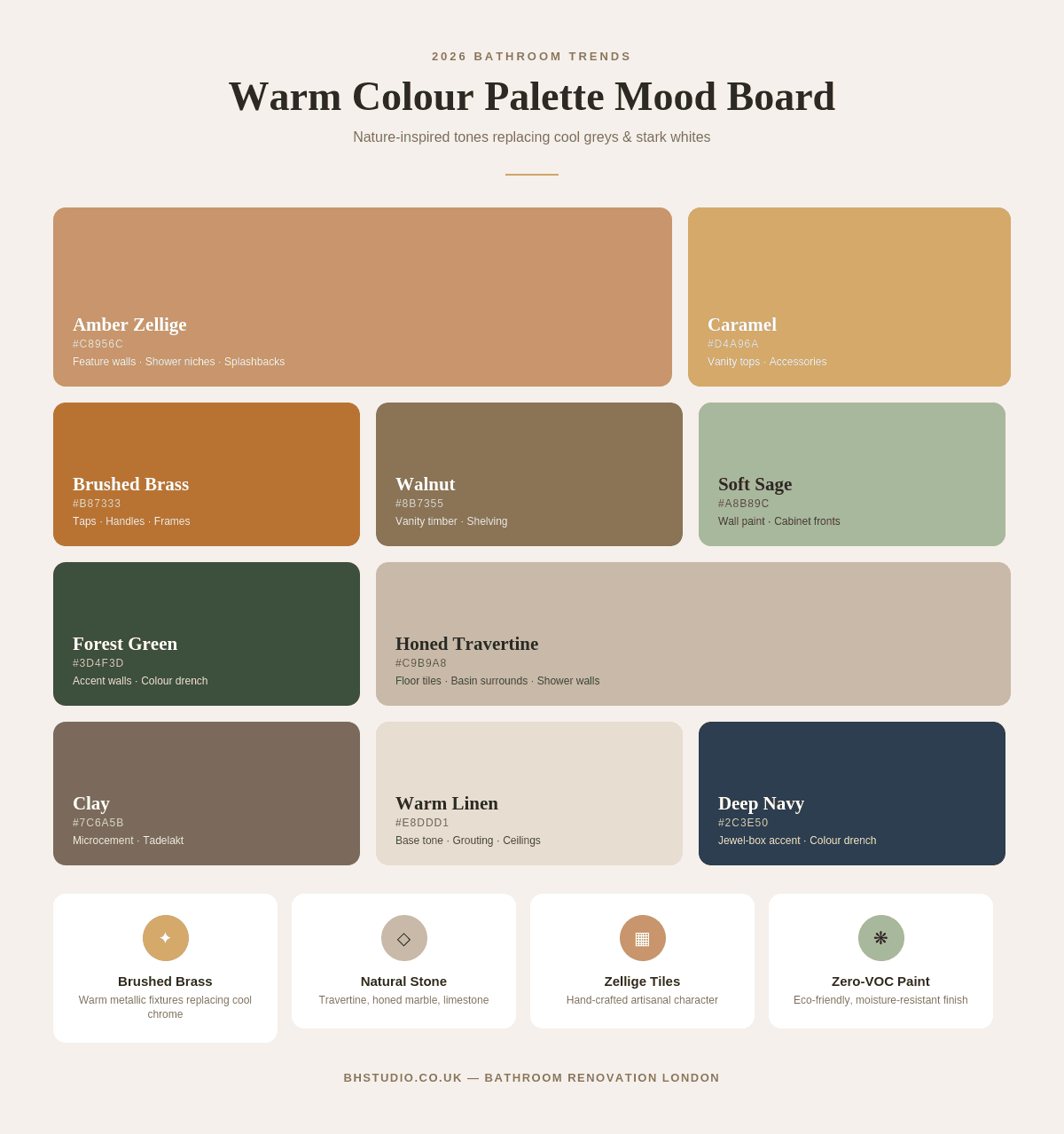
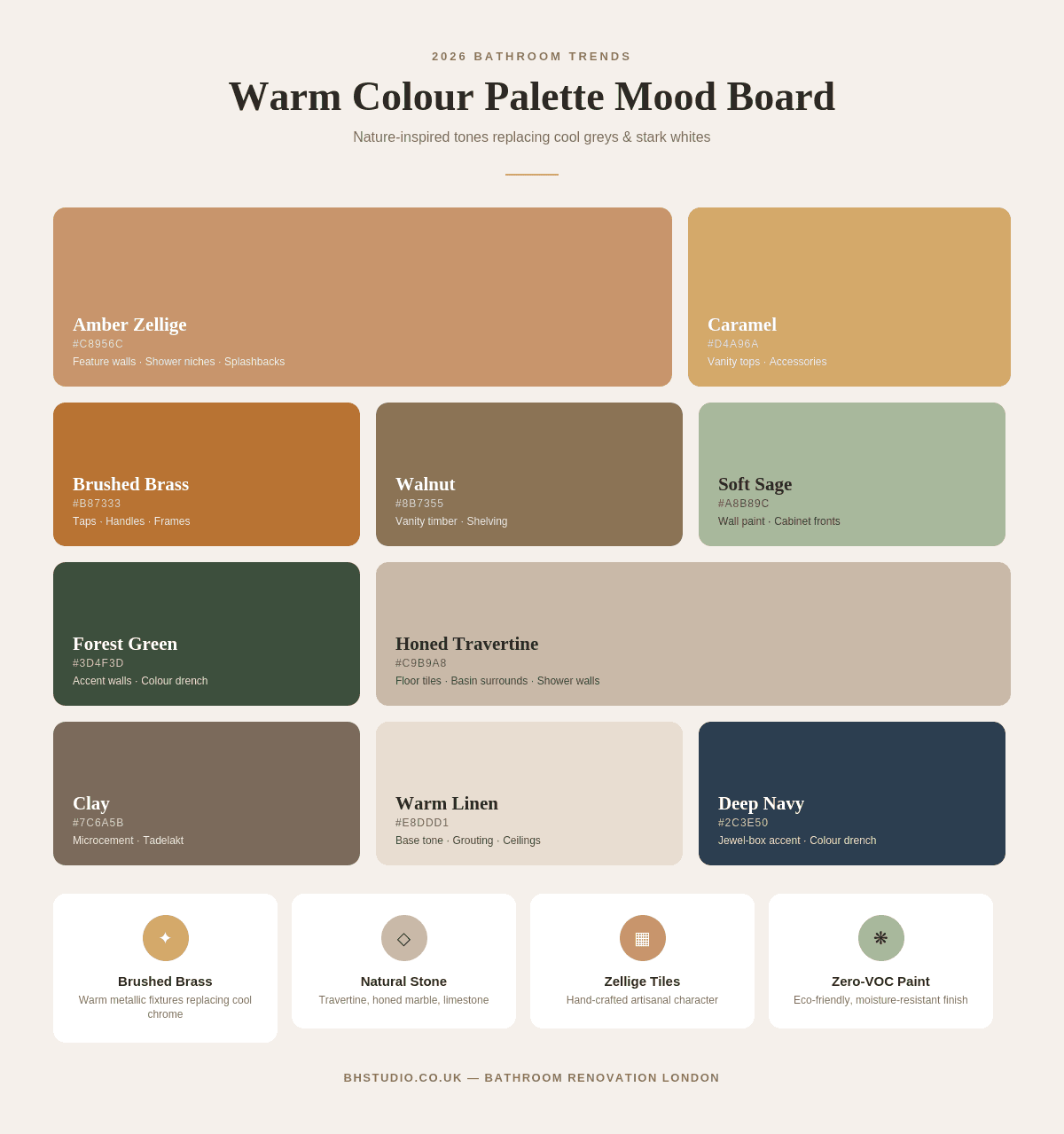
The all-white bathroom is giving way to richer, more grounded tones. Amber, caramel, terracotta, clay, and soft sage greens are replacing the stark whites and cool greys that have been ubiquitous in London bathrooms for the past several years. These nature-inspired hues create a calming atmosphere while adding depth and personality. Sherwin-Williams' 2026 Colour of the Year, Universal Khaki, exemplifies this move toward warm, mid-tone neutrals that embody comfort without compromising sophistication.
For those drawn to bolder statements, deep jewel tones – emerald, sapphire, and rich navy – are also gaining traction, particularly as colour-drenching becomes more popular. This technique involves painting the entire room, including ceiling and trim, in a single colour family, creating an immersive, cocooning effect that transforms a bathroom into a jewel-box retreat. It is a particularly effective approach in smaller London bathrooms and ensuites where the unified colour creates an illusion of greater space.
Sculptural Stone and Natural Materials
Natural stone has been a staple of luxury bathroom design for years, but in 2026 it is being used in more expressive, sculptural ways. Rather than flat slabs with sharp edges, designers are embracing fluid, carved forms – curved vanity basins, wave-like ledges, and tubs that appear almost poured into place. The emphasis is on allowing natural veining and texture to flow uninterrupted across rounded shapes, turning functional fixtures into pieces of functional art.
Travertine, with its warm, honeyed tones, continues to be enormously popular in London bathroom renovations. Honed marble in softer colourways – think blush, taupe, and warm grey – is also having a moment, as is the increasing use of microcement and tadelakt. These seamless plaster finishes create a grout-free, spa-like surface that is both highly practical and visually stunning, and they can be applied directly over existing tiles, reducing both cost and disruption during a bathroom refurbishment.
Fluted Textures and Ribbed Detailing
Texture is one of the defining characteristics of bathroom design in 2026. Fluted and ribbed surfaces have moved well beyond kitchen cabinetry and into the bathroom, appearing on vanity units, shower screens, and wall panelling. Fluted glass shower enclosures are particularly popular – they offer moderate privacy while allowing light to diffuse beautifully through the space, and they have the practical advantage of hiding water spots far better than clear glass.
Three-dimensional wall tiles, textured ceramics, and hand-crafted zellige tiles with deliberately irregular surfaces are also gaining momentum. These artisanal finishes add character and warmth that mass-produced alternatives simply cannot match. For London homeowners renovating period properties, hand-painted tiles with Delft-style motifs or soft botanical patterns offer a way to introduce heritage charm while keeping the overall scheme feeling fresh and contemporary.
Spa-Inspired Bathroom Renovation Ideas
The transformation of bathrooms into personal wellness spaces is perhaps the most significant shift in residential design over the past five years, and it shows no sign of slowing. The NKBA's 2026 Bath Trends Report found that 77 per cent of design professionals say homeowners are now drawing direct inspiration from hotel and resort experiences when planning their bathroom renovations. For affluent London homeowners, the spa-inspired bathroom has become a non-negotiable standard.
Walk-In Showers and Wet Rooms
Walk-in shower enclosures remain one of the most searched-for bathroom upgrades in the UK, and in 2026 the trend is accelerating further. Large fixed glass panels paired with low-profile trays or fully tanked wet-room floors create a seamless, open feel that makes even compact London bathrooms appear more spacious. Frameless glass, curbless entries, and concealed linear drains contribute to the clean architectural lines that define modern spa-inspired bathroom design.
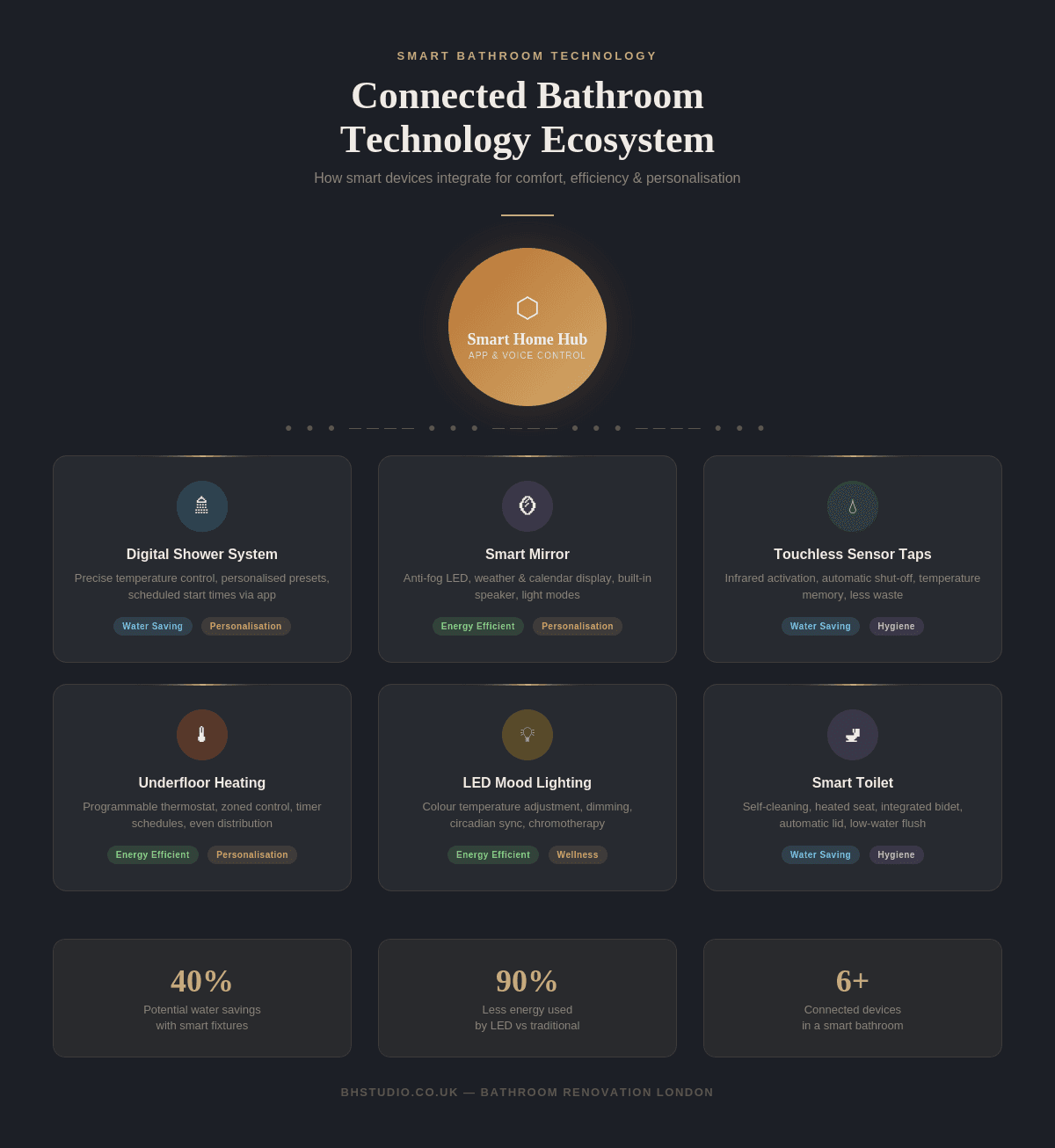
Rainfall showerheads, body jets, and steam functions are increasingly standard in premium London walk-in shower installations. Digital shower systems from brands like Moen and Kohler allow you to programme precise temperature, flow rate, and spray patterns – and store personalised presets for different household members. For London households where morning routines are shared, this level of personalisation is both a luxury and a practical necessity.
Freestanding Bathtubs as Focal Points
The freestanding tub remains an aspirational centrepiece in luxury bathroom design, but in 2026 it is being deployed with more restraint and intention. Rather than oversized statement pieces crammed into tight rooms, London designers are selecting proportionate freestanding baths that complement the layout rather than dominate it. Sculptural silhouettes in natural materials – stone composite, cast iron, and even timber-clad forms – are replacing the ubiquitous white acrylic ovals of recent years.
Placed beneath a window, alongside a feature wall, or centred in a larger primary bathroom, a well-chosen freestanding bath becomes an invitation to slow down. Paired with floor-mounted taps in brushed brass or aged bronze, and perhaps a wall-mounted book ledge or wine shelf, the bathtub experience becomes a deliberate ritual rather than a rushed soak. This is precisely the kind of elevated, wellness-driven design that London homeowners are investing in.
Layered Lighting for Mood and Function
Lighting design has emerged as one of the most impactful elements of a bathroom renovation. In 2026, the approach is layered and intentional: ambient lighting provides a soft foundation through recessed or ceiling-mounted fixtures; task lighting delivers focused, shadow-free illumination at the vanity for grooming; and accent lighting highlights architectural features or creates visual warmth in key zones. The NKBA reports that 92 per cent of designers now consider task lighting essential in primary bathroom design.
Mood lighting in showers is an emerging trend that brings chromotherapy – the therapeutic use of colour – into everyday bathing. LED strips, illuminated showerheads, and smart lighting systems that adjust colour temperature throughout the day are all gaining popularity. Statement pendant lights and sculptural fixtures, which have dominated living spaces for several years, are now making their way into bathrooms, adding a curated, residential feel that elevates the space beyond its utilitarian origins.
Smart Bathroom Technology Worth the Investment
Technology in the bathroom is no longer a novelty – it is rapidly becoming an expected feature in premium London homes. The key shift in 2026 is integration: smart systems that work seamlessly in the background, enhancing comfort and efficiency without cluttering the visual design. The best smart bathrooms feel warm and organic; you would never know the technology was there until you need it.
Digital Showers and Touchless Fixtures
Digital shower systems represent one of the most practical smart upgrades available. Through intuitive touch panels or smartphone apps, you can calibrate temperature to the exact degree, control flow rate and spray pattern, and activate presets – all before you step into the enclosure. Thermostatic technology maintains consistent water temperature from the moment the shower starts, eliminating the frustrating wait for the right heat and reducing water waste in the process.
Touchless sensor taps are another increasingly standard feature in London bathroom refurbishments. They reduce water waste, improve hygiene – particularly valuable in family bathrooms – and add a sleek, contemporary aesthetic. Digital faucets with built-in temperature control help conserve energy without sacrificing comfort, proving that even small fixture upgrades can deliver meaningful efficiency gains over time.
Smart Mirrors and Integrated Displays
Smart mirrors have evolved significantly and are now among the most requested features in high-end London bathroom renovations. Beyond basic anti-fog functionality and LED backlighting, today's smart mirrors can display weather updates, calendar events, and news; stream music through built-in speakers; and offer adjustable lighting modes for different tasks – from precise makeup application to relaxed evening bathing.
TV mirrors are also making a comeback after a period where they were prohibitively expensive for most residential projects. Improved technology has brought costs down while significantly enhancing picture quality, and the screen sits invisibly behind the mirror surface when not in use. Smart toilets with self-cleaning functions, heated seats, integrated bidets, and even health-monitoring sensors are another category gaining ground rapidly – moving from luxury hotels into everyday London homes. While still a premium investment, these fixtures offer daily comfort benefits that homeowners consistently describe as worthwhile.
Sustainable Bathroom Design for the Eco-Conscious London Homeowner
Sustainability in bathroom design is no longer a niche concern – it has become a mainstream expectation among London's environmentally aware homeowners. The good news is that eco-friendly bathroom design no longer requires compromise on aesthetics or luxury. In fact, many of the most desirable bathroom trends for 2026 – natural materials, efficient fixtures, timeless design – are inherently sustainable. The challenge is simply making informed choices at every stage of the refurbishment process.
Water-Saving Fixtures and Fittings
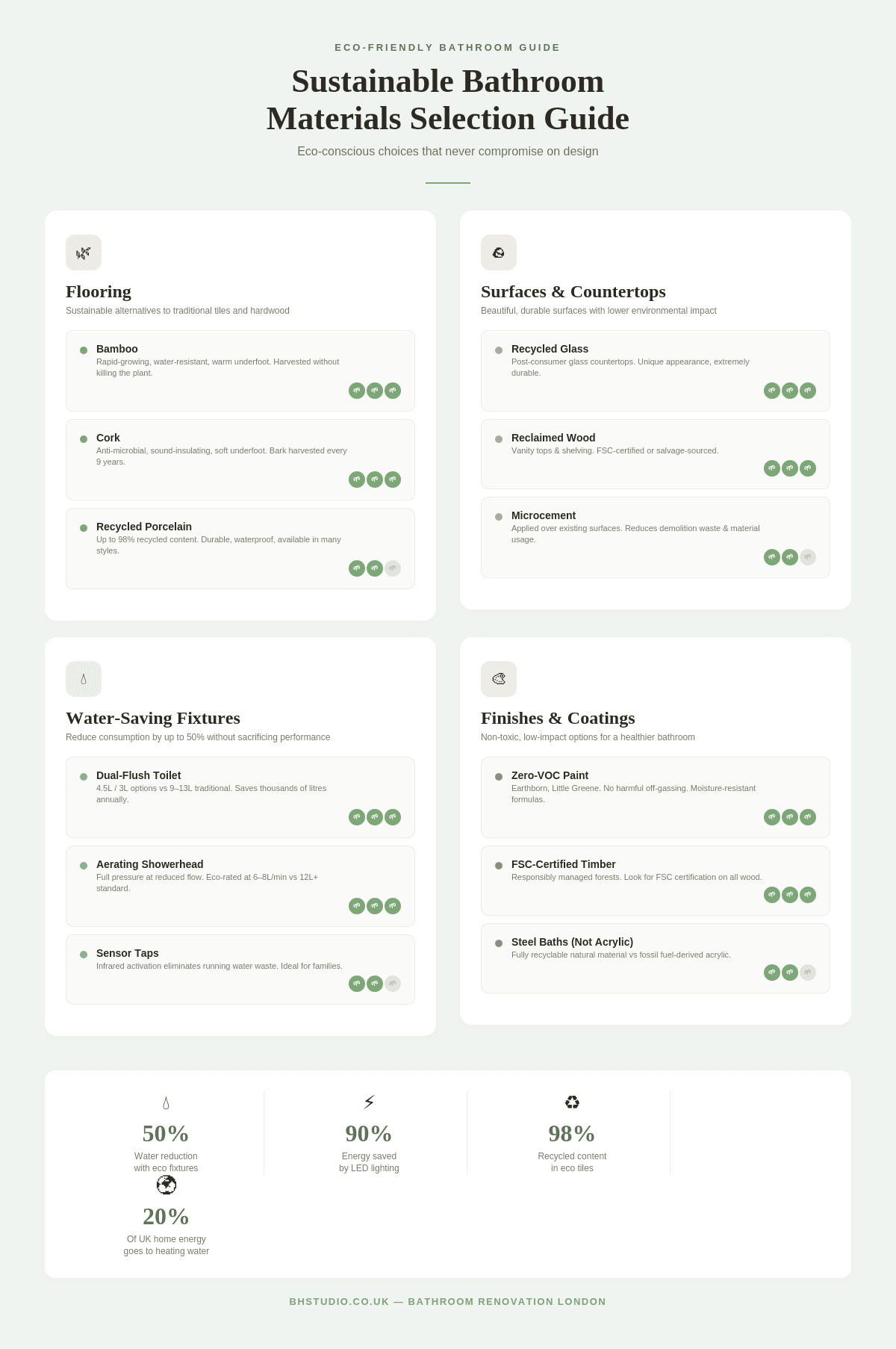
Water conservation is the most impactful area of sustainable bathroom design. Dual-flush toilets can reduce water usage by up to 50 per cent compared to older single-flush models, consuming as little as 4.5 litres per flush versus the nine to thirteen litres used by traditional cisterns. Low-flow showerheads with aerating technology maintain satisfying water pressure while significantly reducing consumption – an important consideration in London, where the Thames Water Authority has highlighted growing demand pressures.
Sensor-activated taps eliminate the water wasted while hands are being lathered, and modern thermostatic shower valves reach the desired temperature faster, reducing the cold water that runs while you wait. When these fixtures are combined across a full bathroom renovation, the cumulative water savings can amount to thousands of litres annually – delivering meaningful reductions in utility bills alongside genuine environmental benefit.
Eco-Friendly Materials and Finishes
Material choices have a profound impact on the environmental footprint of a bathroom refurbishment. Reclaimed wood, recycled glass countertops, and tiles manufactured from up to 98 per cent recycled content are all now readily available and visually indistinguishable from their conventional counterparts. For flooring, bamboo and cork offer sustainable alternatives to traditional hardwood – both are rapidly renewable, naturally moisture-resistant, and bring a warm, organic texture to the bathroom.
Paints and sealants deserve particular attention. Many standard bathroom products contain volatile organic compounds (VOCs) linked to respiratory issues and environmental harm. UK brands such as Earthborn and Little Greene offer zero-VOC bathroom paints that are durable, moisture-resistant, and available in a wide range of contemporary colours. Choosing steel baths over acrylic is another considered swap – steel is a naturally occurring, fully recyclable material, whereas acrylic production relies on burning fossil fuels. These choices may seem incremental, but they compound into a bathroom that is genuinely kinder to the environment.
Energy-Efficient Heating and Ventilation
Heating water accounts for roughly 20 per cent of a UK home's energy consumption, making the bathroom a prime area for efficiency improvements. Insulating hot water pipes, lowering boiler temperatures to 60°C, and installing heat-recovery drain systems can collectively reduce energy waste without any perceptible change to your bathing experience. Underfloor heating, while a premium upgrade, is particularly efficient in bathrooms because it distributes warmth evenly across a relatively small area.
LED lighting is now effectively non-negotiable in any bathroom renovation – it uses up to 90 per cent less energy than traditional bulbs and has a dramatically longer lifespan, reducing both consumption and waste. High-quality extractor fans with humidity sensors automatically manage moisture levels, preventing mould growth and protecting the longevity of your finishes. Maximising natural light through skylights, glazed internal walls, or enlarged windows where planning allows further reduces reliance on artificial lighting while creating a brighter, healthier bathroom environment.
Maximising Space in London Bathrooms
Space is at a premium in the capital, and London bathrooms are frequently compact. Clever design, however, can make even the smallest bathroom feel generous, functional, and luxurious. The key lies in combining space-saving fixtures with visual tricks that expand the perceived footprint of the room.
Floating Vanities and Wall-Hung Fixtures
Wall-hung vanity units and floating toilets are among the most effective space-maximising strategies in modern bathroom design. By lifting fixtures off the floor, you reveal the full extent of the floor surface, creating an immediate sense of openness. The visible floor area makes the room feel larger, and the space beneath wall-hung units is far easier to clean – a practical benefit in busy London households. Concealed cistern frames create a sleeker profile for wall-hung WCs, and when paired with rimless toilet designs, the result is both hygienic and visually refined.
For vanity units, the choice between wall-hung and floor-standing depends on both the property style and storage requirements. Wall-hung units suit contemporary apartments and make compact ensuites feel more spacious, while floor-standing vanities offer greater storage capacity and complement the character of period London homes. Regardless of the mounting method, fluted and textured vanity fronts add subtle architectural interest that elevates the room without requiring additional floor space.
Clever Storage Solutions That Work Harder
Storage is no longer an afterthought in bathroom design – it is a primary design consideration. Recessed niches in shower walls, once a simple practical inclusion, have evolved into enlarged ledge-style shelves and continuous horizontal tablets that double as architectural features. Built-in mirrored cabinets, concealed behind flush-mounted doors, provide ample toiletry storage without disrupting clean wall lines.
In 2026, London bathroom designers are increasingly borrowing from kitchen design principles, incorporating pull-out drawers within vanity units, built-in organiser inserts, and even hidden laundry hampers that keep clutter out of sight. Large-format porcelain tiles with fewer grout lines create visual continuity that makes walls and floors appear to extend further, while vertical tile stacking is being used to enhance perceived ceiling height – a particularly valuable trick in London properties with lower ceilings.
Bathroom Renovation Costs in London: What to Expect in 2026
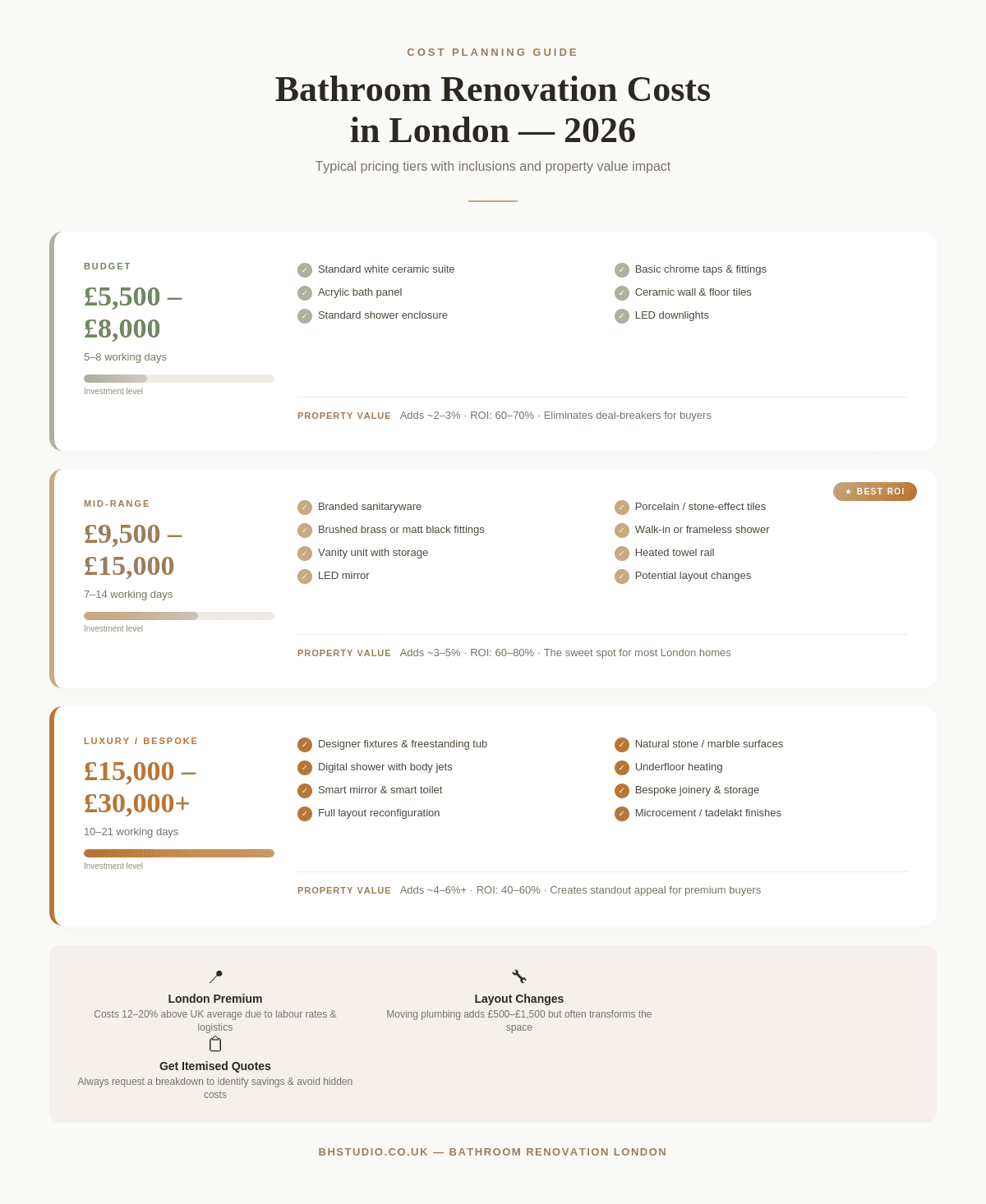
Understanding realistic costs is essential for planning a successful bathroom renovation in London. Prices in the capital typically sit 12–20 per cent higher than the national UK average, driven by elevated labour rates, logistics costs, and the complexities of working within London's varied housing stock. In 2026, a full bathroom refurbishment in London generally falls into three broad brackets: budget projects at £5,500–£8,000, mid-range renovations at £9,500–£15,000, and high-end luxury installations from £15,000 upwards – with bespoke projects in premium postcodes regularly exceeding £30,000.
Several factors significantly influence the final cost. Changing the plumbing layout – moving the toilet, basin, or shower position – is one of the biggest cost drivers, but it is also often what makes the difference between a basic update and a genuinely transformed space. Tiling is another major cost variable: complex patterns such as herringbone or large-format tiles require more skilled labour, and full floor-to-ceiling tiling can roughly double the tiling budget compared to half-height installation. Material choices also have a substantial impact – premium fixtures in brushed brass, matte black, or specialist finishes carry a meaningful premium over standard chrome.
Daily labour rates in London currently range between £220 and £350 depending on the trades involved, and a typical full strip-out and installation takes 7–14 working days. Experienced contractors who work to a clear schedule and dedicate a team to your project can often complete the work more efficiently than those juggling multiple sites simultaneously. It is always worth requesting an itemised breakdown of costs from any contractor you are considering, and sourcing some materials independently can yield savings – particularly during sale periods.
How a Bathroom Refurbishment Adds Value to Your London Property
A bathroom renovation is consistently ranked by UK estate agents as one of the most effective ways to increase a property's market value and accelerate its sale. Research from Direct Line Home Insurance found that updating a bathroom can increase property value by almost £9,000. Other UK studies place the uplift at three to five per cent of the overall property value – and in London's higher-value market, that percentage translates to a significantly larger absolute figure than the national average.
Mid-range bathroom renovations in the UK typically recoup 60–70 per cent of their cost upon resale, with some well-targeted upgrades returning even more. The features that deliver the strongest return include modern white sanitaryware (coloured suites are a well-documented value detractor), walk-in shower enclosures, quality vanity units with adequate storage, and energy-efficient fixtures that appeal to environmentally conscious buyers. Adding an ensuite to the primary bedroom, where the property does not already have one, can add up to six per cent to the property's value – making it one of the highest-ROI bathroom investments available.
However, return on investment is only part of the equation. A thoughtfully renovated bathroom makes a property easier to sell, reduces time on the market, and positions your home favourably against competing listings. For London homeowners planning to remain in their property, the daily quality-of-life improvement is arguably an even more compelling reason to invest. A well-designed bathroom provides years of comfort, function, and enjoyment – benefits that do not show up on a balance sheet but are felt every single day.
Choosing the Right Bathroom Renovation Partner in London
The quality of installation matters as much as the quality of design. A beautifully specified bathroom that is poorly installed will not deliver the value, durability, or daily enjoyment you expect – and rectifying workmanship issues after the fact is both expensive and disruptive. When selecting a bathroom renovation partner in London, prioritise teams that offer end-to-end project management, from initial design consultation and material sourcing through to final installation and snagging.
Look for contractors who provide a detailed, itemised quotation rather than a single lump sum. Transparency around costs, timelines, and scope of work protects both parties and prevents surprises mid-project. Check for trade accreditations, insurance, and a portfolio of completed London projects – ideally in properties similar to your own. Client testimonials and reviews offer valuable insight into the actual experience of working with a team, not just the finished result.
At Better Homes, we approach every bathroom renovation as a collaboration. We listen to how you live, understand the character and constraints of your property, and bring design expertise that balances contemporary trends with timeless principles. Our work spans the full range of London properties – from compact ensuites in modern apartments to expansive primary bathrooms in period homes – and we are equally comfortable delivering a refined mid-range refurbishment or a bespoke luxury transformation. If you are considering a bathroom renovation in London, we would welcome the opportunity to discuss your project.
Quick Takeaways
1. Bathroom design in 2026 prioritises warmth, texture, and natural materials over the cool minimalism of previous years – think amber tones, sculptural stone, and artisanal tiles.
2. Spa-inspired features including walk-in showers, freestanding tubs, and layered lighting have moved from luxury aspiration to mainstream expectation among London homeowners.
3. Smart technology – digital showers, smart mirrors, touchless taps, and smart toilets – is becoming standard in premium London bathroom renovations, with integration and invisibility as the guiding principles.
4. Sustainable bathroom design delivers both environmental and financial returns: water-saving fixtures, eco-friendly materials, and energy-efficient systems reduce utility bills while increasing property appeal.
5. A mid-range bathroom refurbishment in London typically costs £9,500–£15,000 and can add three to five per cent to your property's value – with mid-range projects offering the best ROI sweet spot.
6. Space-maximising strategies such as floating vanities, wall-hung WCs, recessed storage, and large-format tiles are essential for making compact London bathrooms feel generous and luxurious.
7. Choosing an experienced renovation partner with transparent pricing, end-to-end project management, and a proven portfolio of London projects is the single most important decision you will make.
Final Thoughts: Making Your Bathroom Renovation Count
A bathroom renovation in London is far more than a cosmetic upgrade. It is an investment in your property's value, your household's daily comfort, and – when approached with the right partner – a genuinely enjoyable creative process. The trends shaping bathroom design in 2026 reward thoughtfulness: warm materials that age gracefully, sustainable choices that reduce long-term costs, and integrated technology that enhances your routine without demanding your attention.
Whether you are planning a complete bathroom refurbishment or a targeted refresh, the principles remain the same. Start with a clear understanding of your space, your budget, and how you actually use the room. Invest in quality materials and professional installation – the difference between a bathroom that looks good on day one and one that still performs beautifully in ten years almost always comes down to workmanship. And do not underestimate the power of considered design to transform a functional room into a space you genuinely look forward to spending time in.
At Better Homes, we help London homeowners navigate every stage of the bathroom renovation journey – from initial inspiration and design development through to flawless installation. If you are ready to transform your bathroom into a space that reflects the way you live, we would love to hear from you. Get in touch with our team to start a conversation about your project.
Frequently Asked Questions About Bathroom Renovation in London
How much does a bathroom renovation cost in London in 2026?
A full bathroom refurbishment in London typically ranges from £5,500 for a budget project to £30,000 or more for a bespoke luxury installation. Most London homeowners undertaking a mid-range renovation can expect to spend between £9,500 and £15,000, which includes design, materials, labour, and installation. Costs are influenced by bathroom size, material specification, layout changes, and the complexity of existing plumbing and electrics.
How long does a bathroom renovation take in London?
A typical full bathroom renovation in London takes between 7 and 14 working days, depending on the scope of work. Simple refreshes involving fixture and fitting upgrades can be completed in five to seven days, while more complex projects involving layout changes, floor-to-ceiling tiling, or wet-room conversions may take up to three weeks. Ordering custom materials or undertaking structural work can extend the timeline further.
Will a bathroom renovation add value to my London property?
Yes. UK property research consistently shows that a well-designed bathroom renovation can increase a home's resale value by three to five per cent. On a London property, this represents a significant absolute figure. Mid-range renovations typically recoup 60–70 per cent of their cost at resale, with key value-adding features including modern white sanitaryware, walk-in showers, quality storage, and energy-efficient fixtures. Adding an ensuite bathroom can add up to six per cent to your property's value.
What are the most popular bathroom design trends in London for 2026?
The dominant trends include warm earthy colour palettes replacing cool whites and greys, sculptural natural stone, fluted and textured surfaces, spa-inspired walk-in showers with digital controls, freestanding bathtubs as design focal points, smart mirrors and integrated technology, sustainable materials, and layered lighting with mood and chromotherapy features. The overarching theme is warmth, wellness, and intentional design.
Is it worth installing smart technology in a bathroom renovation?
For London homeowners investing in a mid-range or premium bathroom renovation, smart technology increasingly represents excellent value. Digital showers, touchless taps, and smart lighting deliver daily comfort and efficiency benefits while also appealing to future buyers. Smart toilets and TV mirrors remain more niche but are rapidly gaining mainstream acceptance. The key is choosing technology that solves real problems – water efficiency, personalisation, hygiene – rather than novelty features that may date quickly.
How can I make my bathroom renovation more sustainable?
Focus on three areas: water conservation (dual-flush toilets, low-flow showerheads, sensor taps), sustainable materials (recycled tiles, FSC-certified timber, zero-VOC paints, steel rather than acrylic baths), and energy efficiency (LED lighting, underfloor heating, insulated hot water pipes, high-quality extraction). Choosing durable, high-quality fixtures that last decades rather than cheaper alternatives that need replacing is also one of the most impactful sustainability decisions you can make.
Do I need planning permission for a bathroom renovation in London?
Most standard bathroom renovations do not require planning permission, as they fall within permitted development rights. However, if your property is in a conservation area, is a listed building, or if the renovation involves structural changes, extending the footprint, or altering external windows, you may need permission from your local planning authority. Properties in certain London boroughs – including parts of Kensington and Chelsea, Westminster, and Camden – are more likely to have additional restrictions. Always check with your local authority or an experienced renovation partner before work begins.
Related Guides You Should Read Next
Bathroom Renovation Cost Guide (Foundations)
Cost structure fundamentals and scope decisions before final specification.
Read this guideHow to Choose a Bathroom Fitter in London
Due-diligence framework for selecting the right delivery partner.
Read this guideCommon Renovation Mistakes to Avoid
Budget, planning, procurement and design pitfalls relevant to any refurbishment.
Read this guideHow Renovations Influence Property Value
ROI thinking for London homeowners balancing lifestyle and resale value.
Read this guideWe Would Love to Hear From You
Thank you for reading our guide to bathroom renovation in London for 2026. We hope it has given you valuable ideas and practical insight to help plan your own project. If you found this article useful, please share it with friends, family, or colleagues who may be considering a bathroom refurbishment – it helps us continue creating in-depth resources like this.
We are always keen to hear from our readers. What is the single feature you most want in your next bathroom renovation? Whether it is a walk-in rainfall shower, a freestanding stone bath, underfloor heating, or something else entirely, let us know in the comments or reach out to us directly at bhstudio.co.uk. Your feedback helps us shape the content and services we offer, and we genuinely enjoy the conversation.
References
1. National Kitchen & Bath Association (NKBA), 2026 Bath Trends Report – Industry survey of nearly 700 design professionals on emerging bathroom trends including wellness, technology, and spatial design. nkba.org
2. TrustedBuilders, How Much Does It Cost to Renovate a Bathroom in London? (2026) – Comprehensive pricing guide covering London-specific renovation costs, cost drivers, and property-type considerations. trustedbuilders.co.uk
3. AT Home Bathrooms, Bathroom Trends 2026: Modern Design Ideas for UK Homes – UK-focused analysis of bathroom design trends including finishes, fixtures, sustainability, and spatial design strategies. athomebathrooms.co.uk
4. Energy Saving Trust – Data on UK household water consumption and energy usage for heating, referenced for sustainable bathroom design guidance. energysavingtrust.org.uk
5. CG Bathrooms Limited, How Much Does a Bathroom Refurbishment Cost in London in 2026? – London-specific refurbishment cost analysis including labour rates, material pricing, and borough-level insights. cgbathroomslimited.co.uk