 Better Homes
House extension · Home renovation
Loft conversions in London: the complete 2026 guide
Comprehensive 2026 guide for London homeowners on loft conversion types, costs, planning rules, timelines and ROI, with borough-specific considerations.
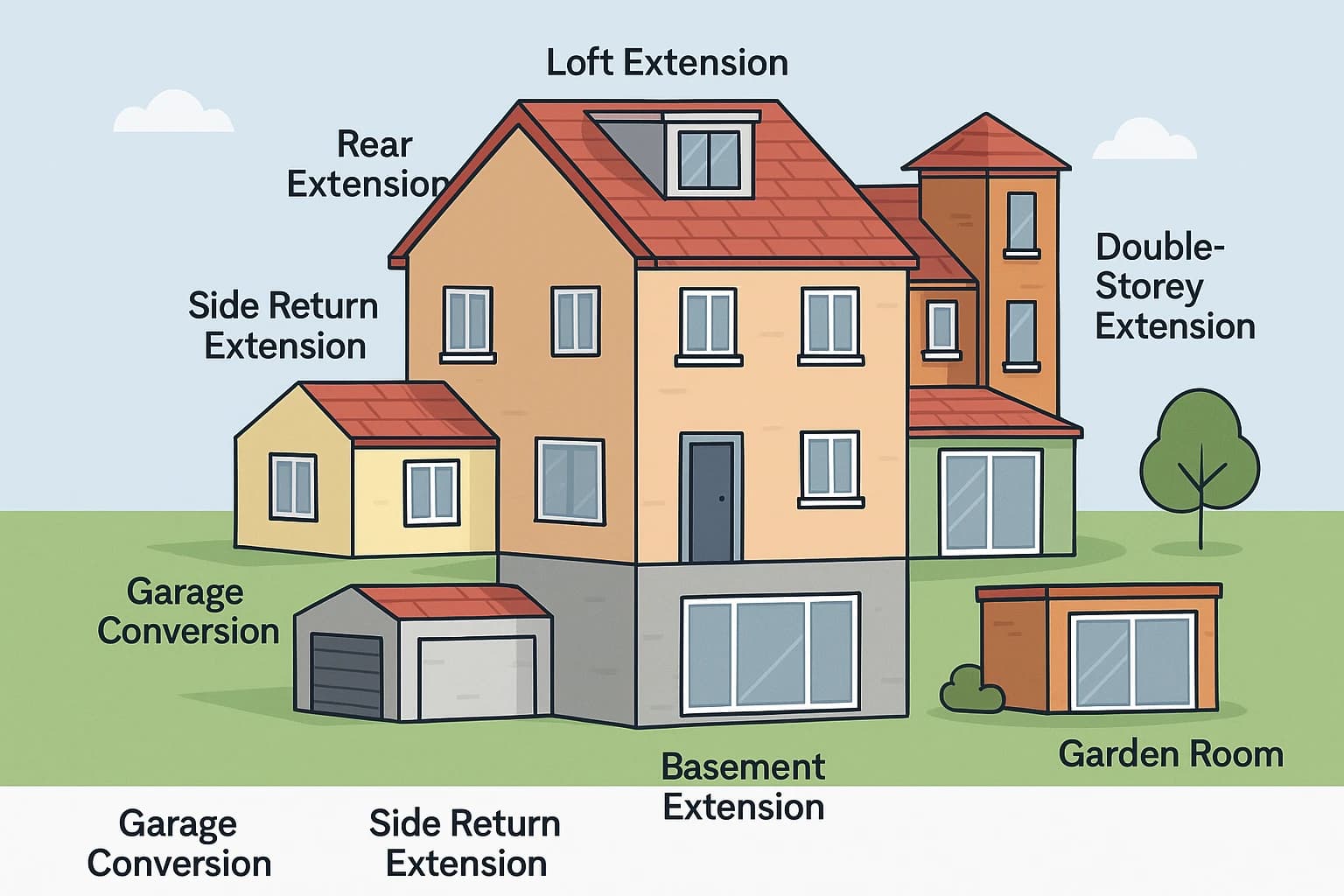
Loft Conversions in London: The Complete 2026 Guide
Quick Answer: A loft conversion in London in 2026 typically costs between £45,000 and £130,000 depending on the type – from a basic Velux at the lower end to a full Mansard at the top. Most conversions on houses can proceed under permitted development rights without planning permission, take 8–16 weeks to complete, and add 15–25% to your property's market value. For a terraced house in an inner London borough, expect to invest around £65,000–£90,000 for a rear dormer conversion, with the potential to add £100,000–£150,000 in value. Building regulations approval is mandatory for all loft conversions regardless of planning status, and party wall agreements are required for most terraced and semi-detached properties. Always start with a feasibility assessment to check your existing head height – you need a minimum of 2.2 metres from floor joist to ridge.
Key Takeaways
1. Cost ranges are wide – but predictable. London loft conversion costs in 2026 range from £45,000 for a Velux conversion to £100,000+ for a Mansard. Inner London carries a 15–25% premium over outer boroughs due to higher labour rates and access constraints.
2. Most houses don't need planning permission. Under permitted development rights, you can add up to 40 cubic metres (terraced) or 50 cubic metres (semi-detached and detached) without a full planning application – but flats, listed buildings, and properties in conservation areas always require it.
3. Building regulations are non-negotiable. Every loft conversion must pass Building Control inspections covering structural integrity, fire safety, staircase design, insulation, and ventilation – regardless of whether planning permission was needed.
4. The ROI is exceptional. A well-executed loft conversion can increase your London property's value by 15–25%, often adding £75,000–£150,000. That frequently outstrips the build cost, making it one of the best home improvement investments available.
5. Party wall agreements are almost always required for terraced and semi-detached homes. Budget £1,000–£3,000 and serve notices at least two months before work begins.
6. It's almost always cheaper than moving. When you factor in stamp duty, estate agent fees, legal costs, and moving expenses, a loft conversion costs a fraction of trading up – and you stay in the neighbourhood you love.
If you're a London homeowner staring at a cramped terrace and dreaming of more space, you're not alone. With average house prices across Greater London sitting well above £500,000 – and the cost of trading up including stamp duty that can easily exceed £25,000 – it's no surprise that loft conversions in London have become one of the most popular and financially rewarding home improvements available.
But the landscape has shifted. Construction costs have risen, energy efficiency requirements have tightened, and London's patchwork of conservation areas, Article 4 directions, and borough-specific planning policies mean that no two projects are identical. Whether you own a Victorian terrace in Hackney, a semi-detached in Wandsworth, or a period property in Islington, this guide gives you everything you need to plan, budget, and execute your loft conversion with confidence.
We've analysed the latest costs, spoken to industry data, and distilled the current regulations into practical advice – so you can make informed decisions from day one, not discover expensive surprises at week six.
Why London Homeowners Are Choosing Loft Conversions in 2026
The economics of moving house in London have never been more punishing. Stamp duty on a £750,000 property – a fairly standard price for a three-bedroom home in zones 2–4 – runs to approximately £27,500. Add estate agent fees (typically 1–2% of the sale price), solicitor costs, survey charges, and the sheer disruption of uprooting your family, and you're looking at £40,000–£60,000 before you've even packed a box.
A loft conversion, by contrast, transforms dead space you already own into a fully functional room – a master bedroom with en-suite, a home office, a playroom, or a guest suite – for a fraction of that cost. And unlike moving, you keep your school catchment area, your neighbours, and your commute.
The remote and hybrid working revolution has only intensified demand. Londoners who once commuted five days a week now need dedicated workspace at home, and a converted loft offers the separation from household noise that a kitchen-table setup simply cannot. According to industry data, home office conversions have seen a significant rise in enquiries since 2020, with many homeowners combining workspace with a guest bedroom to maximise utility.
There's also a generational shift at play. Many homeowners in their thirties and forties – the generation most likely to have young families and the least likely to afford a larger London home – are choosing to invest in their existing properties rather than enter a punishing market at the next rung of the ladder. A loft conversion lets you add a bedroom and bathroom for a cost-per-square-metre that's typically far lower than buying additional space through a house move.
The numbers make the case decisively. A well-designed loft conversion in London can add 15–25% to your property's market value, with inner London boroughs often seeing uplifts that significantly exceed the build cost. We'll break those ROI figures down in detail later in this guide.
Types of Loft Conversions: Which Is Right for Your London Home?
The type of loft conversion suitable for your property depends on your roof structure, the head height available, your budget, and your planning constraints. London's diverse housing stock – from Georgian terraces to 1930s semis to post-war estates – means there's no one-size-fits-all approach. Here are the five main types you'll encounter.
Velux (Rooflight) Conversions
A Velux conversion is the simplest and most affordable option. It works within your existing roof structure, adding skylight windows without altering the roofline. No external changes mean minimal planning complications – this type almost always falls under permitted development.
The trade-off is space. Because you're not extending the roof, usable floor area is limited by the existing pitch, and headroom tapers towards the eaves. A Velux conversion is best suited to properties that already have generous loft height – at least 2.4 metres from floor joist to ridge – and works well for a single bedroom, a home office, or a compact guest suite.
In London, Velux conversions typically cost between £45,000 and £60,000 including all work and finishes. The build itself can be completed in as little as 4–6 weeks, making it the fastest route to additional living space. For homeowners who want minimal disruption and a healthy return without a major financial commitment, this is often the smart choice.
Dormer Loft Conversions
The dormer is London's workhorse loft conversion – and for good reason. A dormer extends vertically from the existing roof slope, creating a box-like projection that dramatically increases both headroom and usable floor area. Rear dormers are by far the most common, as front-facing dormers are rarely permitted under PD rules since they would face a highway.
For terraced and semi-detached houses across South, East, and North London, a rear dormer conversion is typically the default recommendation. It provides enough space for a generous bedroom with en-suite bathroom, or two smaller rooms – transforming a two-bedroom terrace into a three-bedroom family home.
Dormer loft conversions in London cost between £55,000 and £90,000 depending on size and specification, with build times of 8–12 weeks. Most fall comfortably within permitted development limits, though you'll still need building regulations approval and, for terraced properties, a party wall agreement.
One point that's often overlooked: the quality of the dormer's external finish matters enormously. A poorly clad flat-roof dormer can look like an afterthought. Discuss materials and finish with your builder early – GRP (fibreglass) and zinc cladding are increasingly popular for a clean, modern appearance that ages well.
Hip-to-Gable Conversions
If your home has a sloping (hipped) roof at one or both sides – common in semi-detached and detached properties across outer London – a hip-to-gable conversion extends that slope into a vertical wall, creating significantly more internal volume. It's often combined with a rear dormer for maximum space.
This conversion type is particularly popular in suburbs like Ealing, Bromley, Harrow, and Sutton, where semi-detached homes with hipped roofs are the dominant housing type. The additional volume can be transformative – often enough for two bedrooms and a bathroom, or a large master suite with walk-in wardrobe.
Expect to pay between £65,000 and £90,000 for a hip-to-gable conversion in London, with a build timeline of 10–14 weeks. Most qualify for permitted development, though it's worth confirming with your local planning authority, as some boroughs apply stricter scrutiny to side-elevation changes.
Mansard Loft Conversions
A Mansard conversion is the most ambitious – and most expensive – option. It involves restructuring the entire rear roof slope to a near-vertical angle (typically 72 degrees), topped with a flat roof. The result is essentially a full additional storey, with maximum headroom and floor area throughout.
Mansards are the conversion of choice for period terraced properties in central and inner London – think Victorian and Edwardian streets in Camden, Islington, Southwark, and Lambeth. Interestingly, they're also sometimes the only option that conservation area planning officers will approve, because a well-designed Mansard can complement the architectural character of a period streetscape better than a flat-roofed dormer.
However, Mansard conversions almost always require full planning permission, as they fundamentally alter the roof's profile. This adds 8–12 weeks to your timeline for the planning application process alone. Costs in London range from £80,000 to £130,000+, with build times of 12–16 weeks or more.
The ROI can be exceptional in high-value areas. A Mansard on a terraced property in Hackney or Brixton that creates a genuine third floor with two bedrooms and a bathroom can add well over £150,000 in value – comfortably exceeding the build cost.
L-Shaped Dormer Conversions
The L-shaped dormer is a London speciality, designed specifically for Victorian terraced houses with rear outriggers (the kitchen or bathroom extension that projects from the back of the house). Two dormers are built at right angles – one over the main roof, one over the outrigger – connected to form an L-shape that maximises usable space.
This type of conversion creates the largest possible footprint on a terraced property, often yielding enough room for two double bedrooms with an en-suite or family bathroom. It's the go-to choice for families in areas like Lewisham, Wandsworth, Haringey, and Lambeth who need to squeeze maximum value from every square metre.
L-shaped dormers are more complex to engineer and build, which is reflected in the cost: typically £85,000–£120,000 in London, with build times of 10–14 weeks. The structural work required – particularly where the two dormers meet – demands specialist expertise, so it's essential to choose a contractor with proven experience in this conversion type.
How Much Does a Loft Conversion Cost in London in 2026?
Let's cut through the vague estimates and get specific. Loft conversion costs in London carry a 15–25% premium over the rest of the UK, driven by higher labour rates, material transport costs, access constraints (scaffolding on narrow Victorian streets isn't cheap), and the generally higher specification that London buyers expect.
Cost Breakdown by Conversion Type
Here's what you should realistically budget in 2026, based on current market data. These figures include structural work, insulation, electrics, plumbing, plastering, and basic finishes – but typically exclude VAT, high-end interiors, and bespoke joinery.
Velux (Rooflight): £45,000–£60,000. Best for: homes with existing good head height, single-room conversions.
Rear Dormer: £55,000–£90,000. Best for: terraced houses, adding one bedroom with en-suite.
Hip-to-Gable: £65,000–£90,000. Best for: semi-detached properties with hipped roofs.
L-Shaped Dormer: £85,000–£120,000. Best for: Victorian terraces with rear outriggers.
Mansard: £80,000–£130,000+. Best for: period properties in inner London, maximum space gain.
Inner London boroughs (Hackney, Islington, Camden, Southwark) consistently sit at the top of these ranges, while outer boroughs (Bromley, Croydon, Havering) tend towards the lower end. Central London (Kensington, Westminster) can exceed these ranges significantly due to heritage requirements and contractor premiums.
Hidden Costs You Must Budget For
The build cost is the biggest number, but it's not the only one. Here are the additional expenses that catch homeowners off guard:
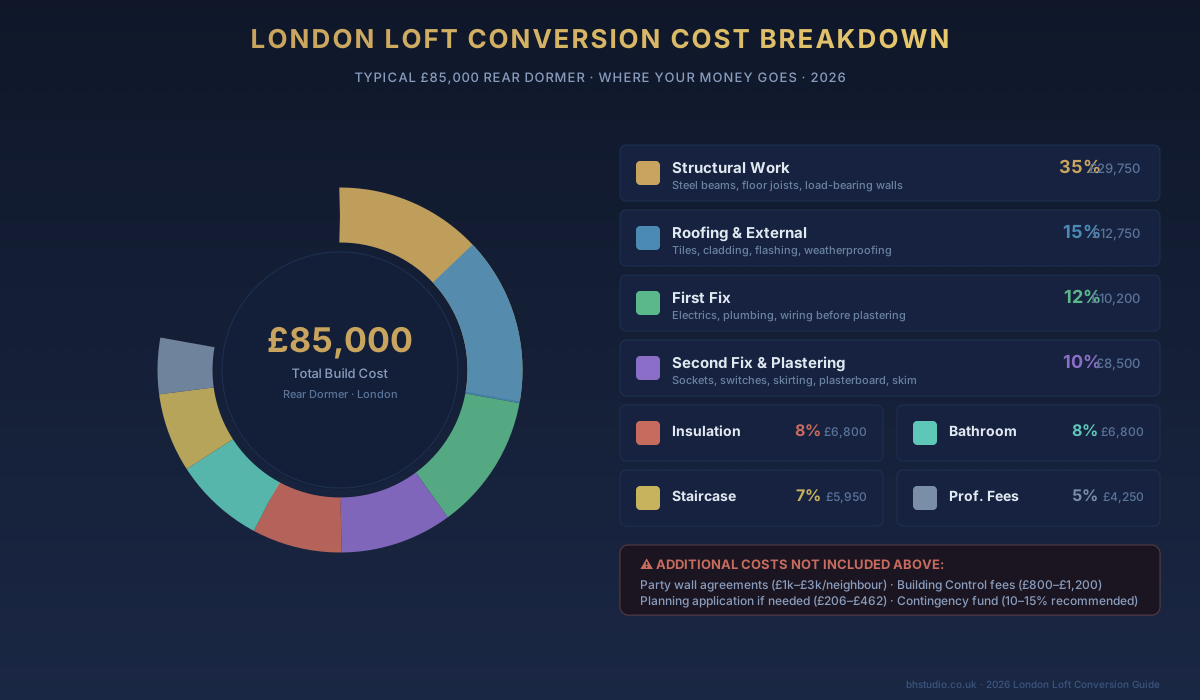
Architectural and structural engineering fees: £3,000–£7,000. You'll need detailed drawings and structural calculations before any builder can quote accurately. Don't skip this step – it's where good design decisions save you tens of thousands.
Party wall agreements: £1,000–£3,000 per neighbour. Required for most terraced and semi-detached properties. You pay both your own surveyor and your neighbour's.
Building Control fees: £800–£1,200. Mandatory for every loft conversion.
Planning application (if needed): £206 for a householder application, though architect preparation fees add £1,000–£3,000.
Scaffolding: £2,000–£5,000 depending on property height and access.
Contingency fund: Always budget 10–15% of the total for unexpected costs. Older London properties frequently reveal surprises when you open up the roof – deteriorated timbers, non-standard construction, or asbestos in older homes.
A realistic total budget for a standard dormer loft conversion in London, including all professional fees and a contingency, is £75,000–£110,000. Plan accordingly.
Planning Permission and Permitted Development in London
Understanding the planning landscape is critical before you invest a penny. The good news is that most loft conversions on houses in London can proceed under permitted development (PD) rights – meaning no full planning application is required. But London's complex regulatory environment means there are important exceptions.
When You Don't Need Planning Permission
Your loft conversion qualifies as permitted development if it meets all of the following criteria: the additional volume doesn't exceed 40 cubic metres for terraced houses, or 50 cubic metres for detached and semi-detached houses; no part of the extension is higher than the existing roof ridge; materials match the appearance of the existing house; no extension extends beyond the plane of the existing roof slope facing a highway; and any side-facing windows are obscure-glazed and non-opening below 1.7 metres.
In practice, this covers the vast majority of rear dormer and hip-to-gable conversions on houses. Velux conversions, which don't alter the roof structure at all, are almost always PD-compliant. The process is faster and cheaper – though you should still apply for a Lawful Development Certificate (around £103) to have written proof that your conversion is legally permitted. This document is invaluable when you come to sell.
Conservation Areas and Listed Buildings
London has over 1,000 conservation areas spread across all 33 boroughs. If your property falls within one, permitted development rights for roof alterations are often restricted or removed entirely. You'll need full planning permission, and the design will face much closer scrutiny from planning officers concerned with preserving the character of the area.
Some boroughs have gone further by issuing Article 4 directions, which strip away specific PD rights in designated zones. Westminster, Camden, Kensington and Chelsea, and parts of Islington are notable for this. The only way to confirm your property's status is to check your borough council's conservation area maps and planning policies – or have your architect do it as part of the feasibility stage.
Listed buildings require Listed Building Consent in addition to planning permission, which is an entirely separate application process. Any works – internal or external – that affect the character of a listed building need consent, and enforcement for non-compliance is severe.
Borough-Specific Considerations
London's 33 boroughs each have their own local planning policies and interpretations of national guidance. What sails through in Lewisham might hit resistance in Camden. Here's a brief overview of notable borough-level nuances:
Westminster and Kensington & Chelsea: Among the strictest in London. Extensive conservation areas and heritage designations mean most loft conversions require full planning permission. Design scrutiny is intense.
Camden and Islington: Large conservation areas with some Article 4 directions. Mansard conversions are often preferred by planning officers over flat-roofed dormers in heritage settings.
Southwark, Lambeth, and Lewisham: Generally more permissive for PD conversions. High volumes of Victorian terraces make rear dormers a very common and well-understood application type.
Outer boroughs (Bromley, Croydon, Havering, Barnet): Typically straightforward for PD conversions, with fewer conservation area complications. Semi-detached houses with hipped roofs make hip-to-gable conversions popular and generally uncontentious.
Regardless of your borough, we strongly recommend getting pre-application advice from your local planning authority if there's any ambiguity about your property's status. It costs a few hundred pounds but can save months of wasted effort.
Building Regulations for London Loft Conversions
Here's the critical point that many homeowners miss: building regulations approval is mandatory for every loft conversion in the UK, even if planning permission isn't required. Planning permission and building regulations are two entirely separate legal frameworks. Planning governs what you build and how it looks. Building regulations govern how you build it safely.
Skipping building regulations doesn't just create safety risks – it creates a legal liability that will surface when you sell. Without a Building Control completion certificate, your solicitor cannot confirm the work is legally compliant, which can derail a sale or force you into expensive retrospective applications.
Structural Requirements
Your existing roof was designed to support tiles and weather, not people and furniture. A loft conversion requires significant structural upgrades: new floor joists (or reinforcement of existing ones) to carry the loads of a habitable room, steel beams to redistribute weight to load-bearing walls, and in many cases, strengthening of the walls below.
A structural engineer will produce calculations specifying exactly what steelwork and timber upgrades are needed. This isn't optional – Building Control will require these calculations before approving any work. Expect to pay £1,500–£3,000 for structural engineering services on a typical London loft conversion.
The minimum recommended headroom for a loft conversion is 2.2 metres from the top of the finished floor to the underside of the ridge. If your existing loft is borderline, options include lowering the ceiling of the room below or, in some cases, raising the ridge – though both add cost and potentially trigger additional planning requirements.
Fire Safety
Fire safety is arguably the most important aspect of building regulations for loft conversions, because you're creating habitable space on the highest floor of the building – furthest from the exit.
For a standard two-storey house gaining a third storey, you'll typically need a protected escape route. This means a fire-rated (FD30) door on every room that opens onto the staircase, from the ground floor up to the new loft room. The staircase itself, hallway, and landing must be enclosed with fire-resistant construction, providing 30 minutes of fire protection.
You'll also need interlinked smoke and heat detectors on every level of the property, and an openable window in the loft room that's large enough for emergency escape (minimum 450mm x 450mm clear opening). If the layout doesn't allow a protected staircase route – for example, in open-plan ground floors – alternative solutions such as sprinkler systems or fire-resistant glazing may be required.
Insulation and Energy Efficiency
Current building regulations (Part L) set strict thermal performance targets for new loft conversions. The roof, walls, and floor of your converted loft must meet specific U-value requirements, which dictate the thickness and type of insulation needed.
In practice, this means high-performance insulation between and over the rafters (rigid PIR boards and mineral wool are the most common combination), double or triple-glazed windows, and careful attention to airtightness to prevent heat loss. The 2025 update to Part L has tightened these requirements further, so ensure your architect specifies to current standards.
Getting insulation right isn't just about compliance – it directly affects your comfort and energy bills. A well-insulated loft room should be comfortable year-round without excessive heating in winter or overheating in summer, the latter being a real issue in top-floor rooms with large areas of glazing.
Party Wall Agreements: What Every London Homeowner Must Know
If your property shares a wall with a neighbour – which covers virtually every terraced and semi-detached house in London – you'll almost certainly need a party wall agreement before starting a loft conversion. This requirement comes from the Party Wall etc. Act 1996, and it's separate from both planning permission and building regulations.
A party wall agreement is needed when your loft conversion involves cutting into or bearing weight on a shared wall – for example, inserting steel beams or floor joists into the party wall. Since this is a standard part of most loft conversions on terraced and semi-detached properties, the requirement applies to the vast majority of London projects.
The process works as follows: you serve a formal party wall notice on your neighbour at least two months before work is scheduled to begin. Your neighbour then has 14 days to consent in writing, request conditions, or dissent. If they consent, work can proceed. If they dissent or fail to respond, a surveyor must be appointed on their behalf to negotiate a Party Wall Award – a legally binding document that sets out how the work will be carried out, access arrangements, and responsibility for any damage.
Here's the part that surprises most homeowners: you pay for everything. Your own surveyor, your neighbour's surveyor, and any third surveyor if there's a dispute. Typical costs for party wall agreements on a London loft conversion range from £1,000 to £3,000 per neighbour. For a mid-terrace property with two adjoining neighbours, that's potentially £2,000–£6,000.
Our strong advice: start the party wall process as early as possible. Serve notices immediately after your plans are finalised. The two-month notice period is a minimum – if your neighbour dissents and surveyors need to negotiate, the process can take three to four months. Many project delays are caused by party wall timelines that weren't factored into the overall schedule.
One insider tip that can save significant money: speak to your neighbours before serving formal notices. A friendly conversation explaining your plans, showing them the drawings, and reassuring them about noise, access, and duration can make the difference between a swift written consent and a protracted formal process.
How Much Value Does a Loft Conversion Add to a London Home?
This is the question that ultimately makes the financial case. And the data is compelling. According to multiple industry sources and building societies, a well-executed loft conversion can increase a London property's market value by 15–25%. In high-demand inner London boroughs, that figure can climb even higher.
ROI by Conversion Type
The return varies by conversion type, property location, and the quality of the finish. Here's what the numbers look like for a typical London property valued at £600,000 before conversion:
Velux conversion (cost ~£50,000): Potential value uplift of 10–15%, or £60,000–£90,000. Net gain: £10,000–£40,000.
Rear dormer (cost ~£75,000): Potential value uplift of 15–20%, or £90,000–£120,000. Net gain: £15,000–£45,000.
L-shaped dormer or Mansard (cost ~£100,000): Potential value uplift of 20–25%, or £120,000–£150,000. Net gain: £20,000–£50,000.
These are conservative estimates. In boroughs where a third bedroom pushes a property into a significantly higher price band – think the jump from a two-bed to a three-bed in Hackney, Brixton, or Balham – the uplift can be dramatic. A two-bedroom terrace in south-east London that gains a third bedroom and en-suite can see price increases of £100,000–£150,000, according to recent valuations.
Loft Conversion vs Moving House: The London Maths
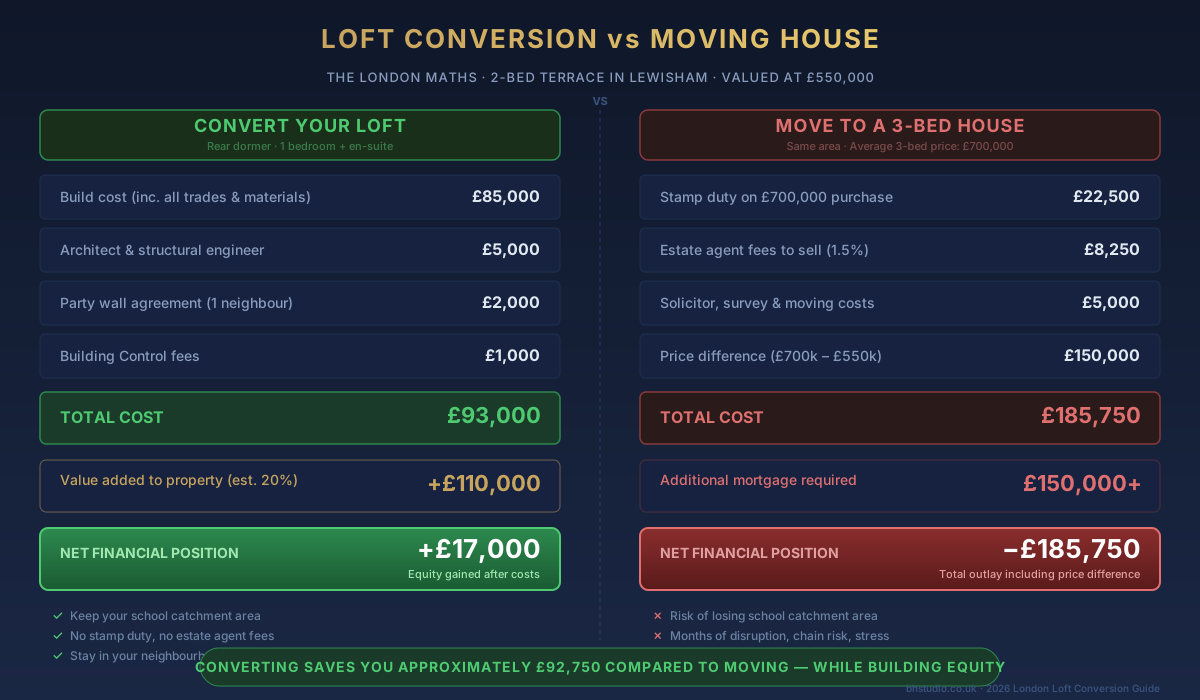
Let's run the numbers for a real scenario. You own a two-bedroom Victorian terrace in Lewisham valued at £550,000. You need a third bedroom. Your two options:
Option A – Move to a three-bedroom house in the same area (average price: £700,000). Stamp duty: ~£22,500. Estate agent fees to sell: ~£8,250. Solicitor and moving costs: ~£5,000. Total cost of moving: ~£35,750, plus the difference in purchase price (£150,000), meaning you need to find an additional £185,750 – or remortgage significantly.
Option B – Convert your loft (rear dormer, one bedroom with en-suite). Build cost including all fees: ~£85,000. Value added to your home: ~£110,000–£130,000. Net position: you've gained £25,000–£45,000 in equity and still live in the same house.
The financial case for converting rather than moving is overwhelming in almost every London scenario. The only situations where moving might make more sense are when you need substantially more space (multiple additional rooms), want to change neighbourhood, or your property isn't structurally suitable for conversion.
The Loft Conversion Process: Step by Step
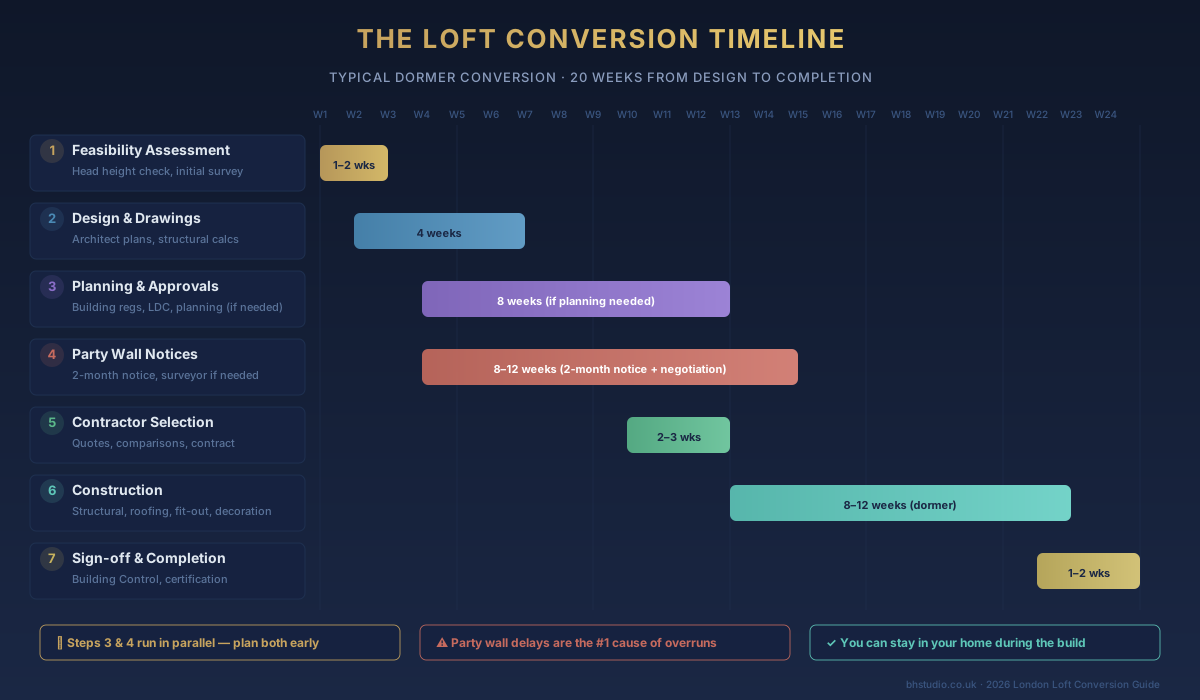
A well-managed loft conversion follows a clear sequence. Rushing or skipping steps invariably leads to delays, cost overruns, or compliance problems. Here's the process from initial idea to moving into your new room:
Step 1 – Feasibility assessment (Week 1–2): Before anything else, check whether your loft can physically be converted. The key measurement is head height – you need at least 2.2 metres from the top of the existing ceiling joists to the underside of the ridge beam. A specialist or architect can visit and measure this in under an hour.
Step 2 – Design and drawings (Weeks 2–6): An architect produces detailed plans showing the layout, staircase position, window placement, and external appearance. A structural engineer calculates the steelwork and floor reinforcement required. These drawings form the basis for your building regulations application and any planning application needed.
Step 3 – Permissions and approvals (Weeks 4–16): Submit your building regulations application. If planning permission is required, submit that too – allow 8 weeks for a decision. Serve party wall notices on any adjoining neighbours. Apply for a Lawful Development Certificate if proceeding under PD.
Step 4 – Contractor selection and scheduling (Weeks 8–12): Obtain at least three detailed quotes from specialist loft conversion companies. Compare not just on price but on included specification, timeline, payment terms, and guarantees. Agree a start date and contract.
Step 5 – Construction (Weeks 12–24): The build itself typically takes 8–16 weeks depending on the type of conversion. Expect scaffolding to go up first, followed by structural work, roofing, first fix electrics and plumbing, insulation, plastering, second fix, and decoration. You can usually remain living in the property throughout, though there will be noise and dust – particularly during the first 3–4 weeks.
Step 6 – Sign-off and completion (Final week): Building Control carries out a final inspection and issues a completion certificate. This document is essential – keep it with your property deeds.
Choosing the Right Loft Conversion Company in London
The difference between a good loft conversion company and a poor one isn't just the finish quality – it's the entire experience, from accurate quoting to clean site management to proper Building Control sign-off. London has hundreds of firms offering loft conversions, and quality varies dramatically.
Start by looking for companies that specialise in loft conversions rather than general builders who offer them as a sideline. Specialists understand the structural complexities, the planning landscape, and the common pitfalls specific to loft work. They've solved the same problems hundreds of times.
Check for membership of recognised trade bodies – the Federation of Master Builders (FMB), the National Federation of Roofing Contractors (NFRC), or RIBA (for architect-led practices). These memberships indicate a commitment to standards and provide dispute resolution mechanisms if things go wrong.
Always ask to see completed projects in person, ideally properties similar to yours. Photos are useful but walking through a finished loft conversion gives you a genuine sense of build quality, staircase design, and spatial feel. Any reputable company should be able to arrange at least two or three viewing opportunities.
Get at least three detailed, itemised quotes – not rough estimates. The quote should specify exactly what's included (structural work, insulation, electrics, plumbing, plastering, decoration, staircase, windows) and what's excluded (bathroom fittings, flooring, bespoke joinery). Vague quotes are a red flag.
Finally, check reviews obsessively. Google reviews, Checkatrade, Trustpilot, and Houzz are all useful, but prioritise reviews that mention the full project experience – not just the final result. Look for comments about communication, adherence to timelines, cleanliness, and how problems were handled.
Financing Your Loft Conversion
Most London homeowners don't pay for a loft conversion from savings alone. Here are the main financing routes available in 2026, each with distinct advantages and considerations.
Remortgaging: The most common approach. If your property has appreciated since you bought it, you may be able to release equity by switching to a new mortgage deal with a higher loan amount. With London property prices having risen significantly over the past decade, many homeowners have substantial equity available. Remortgaging typically offers the lowest interest rates – often 4–5% at current rates – and lets you spread the cost over your full mortgage term.
Further advance from your existing lender: Similar to remortgaging but without switching provider. Your current lender may offer additional borrowing secured against your property. This can be faster to arrange and avoids early repayment charges on your existing deal.
Home improvement loans (unsecured): Personal loans of £25,000–£50,000 are available from most high street banks. Interest rates are higher (typically 6–10%) and terms shorter (5–10 years), but you don't need to use your home as security. This can work well for covering the gap if savings cover most of the cost.
Staged payments: Most loft conversion companies structure payments in stages – typically a deposit (10–15%), then payments at key milestones (structural completion, first fix, second fix, final completion). This means you don't need the full sum upfront and can manage cash flow more effectively.
Our recommendation: speak to a mortgage broker before committing to a financing route. A specialist broker can model the options and identify the most cost-effective approach for your specific circumstances. The cost of the broker is typically zero to you – they're paid by the lender.
Design Ideas That Maximise Your London Loft Space
Good design transforms a loft conversion from a functional extra room into the best room in the house. Here are the design principles and ideas that work particularly well in London loft spaces.
Maximise natural light. Loft rooms live and die by their light quality. Generous Velux skylights (go larger than you think you need), Juliet balconies with full-height glazing, and light wells that draw daylight deep into the floor plan all make a dramatic difference. In a city where natural light is at a premium, this is where design investment pays off most.
Use the eaves intelligently. The sloping areas under the eaves are too low for standing but perfect for built-in storage – wardrobes, bookshelves, desk alcoves, and concealed cupboards. Bespoke joinery that follows the roof pitch creates a clean, fitted look while using every inch of otherwise wasted space.
Consider an en-suite bathroom. For master bedroom conversions, an en-suite is almost mandatory for maximising both daily comfort and resale value. Position the bathroom where the headroom is lowest – you don't need full standing height over a bath or low-level WC. Walk-in showers with frameless glass screens work particularly well in compact loft bathrooms.
Think about the staircase. The staircase is often the most contentious element of a loft conversion, because it takes space from the floor below. Work with your architect to find the position that minimises disruption – building over an existing staircase, using a landing area, or sacrificing part of a box room are common solutions. A well-designed staircase should feel like a natural extension of your home, not an afterthought.
Premium finishes that justify the investment. If you're spending £80,000+ on a conversion, don't undermine it with budget finishes. Hardwood or engineered wood flooring, recessed LED lighting, quality ironmongery, and a well-specified bathroom all signal quality to future buyers. Allocating 5–10% of your budget specifically to finishes can disproportionately increase the perceived value.
Common Mistakes London Homeowners Make
Having worked across London's property landscape, we've seen the same avoidable errors cost homeowners thousands. Here are the mistakes to sidestep:
Not checking head height first. It sounds basic, but we regularly speak to homeowners who've spent weeks researching and planning only to discover their loft height is insufficient. Measure before you dream. If the measurement from the top of the ceiling joists to the underside of the ridge is less than 2.2 metres, a conventional conversion may not be viable without expensive structural interventions.
Assuming permitted development means no approvals needed. PD means no planning application – it doesn't exempt you from building regulations, party wall agreements, or structural calculations. Every loft conversion needs Building Control sign-off, and proceeding without it creates serious legal problems when you sell.
Choosing on price alone. The cheapest quote is rarely the best value. We've seen homeowners accept low quotes only to face spiralling costs when "excluded" items mount up, or quality issues require remedial work. Compare detailed, like-for-like specifications and check what's genuinely included.
Underestimating the timeline. A typical loft conversion takes 4–6 months from initial design to completion, not the "8 weeks" that some optimistic contractors suggest. Factor in design, approvals, party wall notices, and the build itself. If planning permission is needed, add another 8–12 weeks.
Neglecting the staircase design. A poorly positioned staircase can ruin the floor below more than it improves the floor above. Invest in proper architectural design at the outset – moving a staircase during construction is extraordinarily expensive.
Forgetting about post-completion. After the builders leave, you'll need to update your buildings insurance to reflect the increased property value and additional habitable space. You should also notify your mortgage lender. And keep every certificate – the Building Control completion certificate, any electrical and gas safety certificates, the EPC, and party wall documentation – with your property deeds. Your solicitor will need all of these when you sell.
Sustainability and Energy Efficiency in 2026
Energy efficiency is no longer a nice-to-have – it's a regulatory requirement and a genuine value driver. The 2025 updates to Part L of the building regulations set tighter thermal performance targets for new building work, and loft conversions are no exception.
In practical terms, this means your converted loft must achieve specific U-values (a measure of thermal transmittance) for the roof, walls, floor, and glazing. Meeting these standards requires careful specification of insulation type and thickness, airtight construction detailing, and high-performance windows.
Beyond compliance, there's a strong case for exceeding minimum standards. A well-insulated loft room is cheaper to heat, more comfortable in all seasons, and contributes to a better EPC rating for your property. With the increasing importance of EPC ratings in the property market – and potential future legislation linking EPC performance to rental eligibility and mortgage terms – investing in superior insulation now is a decision that pays dividends.
Consider specifying triple-glazed roof windows for superior thermal and acoustic performance (particularly important if you're near a flight path or busy road), mechanical ventilation with heat recovery (MVHR) to maintain air quality without opening windows in winter, and LED lighting throughout to minimise energy consumption.
Visual Guides

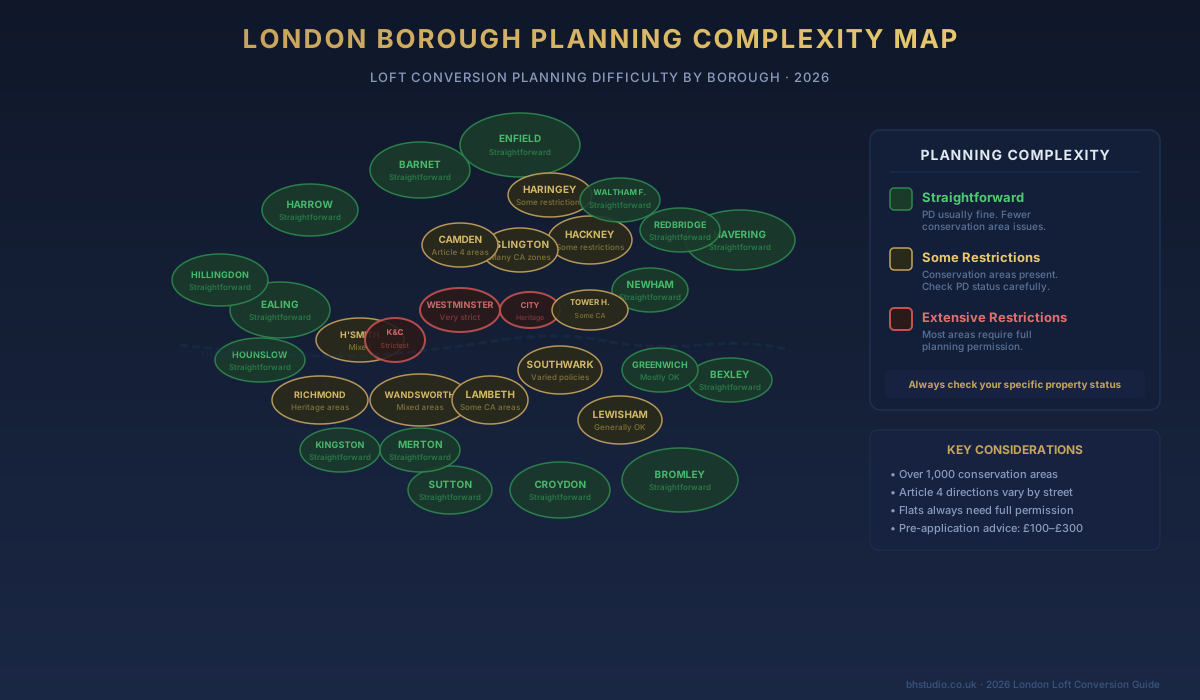
Quick Takeaways
1. Loft conversions in London cost between £45,000 (Velux) and £130,000+ (Mansard) in 2026, with inner boroughs commanding a 15–25% premium over outer areas.
2. Most conversions on houses qualify under permitted development – no planning application needed – but building regulations approval is always mandatory.
3. A well-designed conversion adds 15–25% to your property's value, frequently yielding a net gain of £25,000–£50,000+ after build costs.
4. Party wall agreements are required for nearly all terraced and semi-detached homes. Budget £1,000–£3,000 per neighbour and serve notices at least two months before work begins.
5. The total timeline from initial design to moving in is typically 4–6 months, not the 8 weeks some contractors advertise.
6. Converting is almost always cheaper than moving house in London when you factor in stamp duty, agent fees, and the price premium for an extra bedroom.
7. Check your loft head height first – you need at least 2.2 metres from joist to ridge – before investing time and money in design.
Conclusion
A loft conversion remains one of the smartest investments a London homeowner can make in 2026. The financial case is clear: for a fraction of what it costs to move up the property ladder, you gain a new room (or two), significant equity, and the ability to stay in the neighbourhood and community you've built your life around.
But a successful conversion demands more than just choosing a builder and writing a cheque. It requires understanding your planning status, engaging the right professionals from the outset, budgeting realistically (including hidden costs and contingencies), and allowing sufficient time for approvals and construction. The homeowners who achieve the best outcomes are those who treat their loft conversion as a considered investment – not an impulse purchase.
Whether you're creating a master suite, a home office, a children's playroom, or simply future-proofing your home for the next stage of family life, the space above your head is waiting to be transformed. Start with a feasibility check, consult a specialist architect, and take the first step towards unlocking your home's full potential.
If you're considering a loft conversion in London and want expert guidance on design, planning, and execution, get in touch with Better Homes for a no-obligation consultation. We'll help you understand what's possible, what it'll cost, and how to make it happen.
Frequently Asked Questions
How much does a loft conversion cost in London in 2026?
Costs range from approximately £45,000 for a basic Velux conversion to £130,000+ for a Mansard. A standard rear dormer – the most common type in London – typically costs £55,000–£90,000 including structural work, insulation, electrics, plumbing, and basic finishes. Add 10–15% for professional fees and contingency. Inner London boroughs command higher prices due to labour rates, access complexity, and the premium specifications that buyers expect.
Do I need planning permission for a loft conversion in London?
Most loft conversions on houses can proceed under permitted development rights without planning permission, provided they meet size limits (40 cubic metres for terraces, 50 for semis and detached), height restrictions, and material-matching requirements. However, flats and maisonettes always need planning permission. Properties in conservation areas or listed buildings almost always require it too. Check your borough council's planning portal or get pre-application advice if you're uncertain.
How long does a loft conversion take from start to finish?
The construction phase typically takes 8–16 weeks depending on the type – a Velux conversion can be completed in 4–6 weeks, while a Mansard may take 12–16 weeks or more. However, the total project timeline including design, approvals, party wall notices, and contractor scheduling is usually 4–6 months. If planning permission is required, add an additional 8–12 weeks for the application process.
How much value does a loft conversion add to a London property?
Industry data consistently shows that loft conversions add 15–25% to a London property's value. For a property worth £600,000, that's an uplift of £90,000–£150,000 – typically exceeding the build cost and delivering a net gain. The exact uplift depends on location, conversion type, quality of finish, and whether the extra space pushes the property into a higher price band (for example, adding a third bedroom to a two-bed terrace).
Can I live in my house during the loft conversion?
Yes. Most loft conversions are designed to allow you to remain in the property throughout the build. The main disruption occurs during the first few weeks – when scaffolding goes up, the roof is opened, and structural steelwork is installed. After the roof is weathertight (usually within the first 2–3 weeks), work moves inside and disruption reduces significantly. Expect noise, dust, and trades people on site from around 8am to 5pm Monday to Friday.
What is the minimum head height for a loft conversion?
The recommended minimum is 2.2 metres from the top of the existing ceiling joists to the underside of the ridge beam. This measurement is taken at the highest point – the ridge – and determines whether your loft has sufficient height for a conversion. If the measurement is borderline, options include lowering the ceiling of the room below, or choosing a conversion type (such as a dormer or Mansard) that creates additional headroom by extending the roof.
Is a loft conversion cheaper than moving house in London?
Almost always, yes. Moving from a two-bedroom to a three-bedroom property in the same London area typically costs £35,000–£60,000 in transaction fees alone (stamp duty, estate agent commissions, legal costs, moving expenses) – on top of the higher purchase price. A loft conversion achieves the same extra bedroom for £55,000–£90,000 total, while also adding value to your existing property. The financial advantage of converting over moving is particularly stark in high-value areas.
Related Guides for London Homeowners
House Extension Value Guide
Benchmarks for value uplift, costs, and ROI logic London buyers actually respond to.
Read this guideAvoid High-Cost Renovation Mistakes
Common scope, contractor, and budgeting mistakes that derail projects and trust.
Read this guidePermitted Development in London
How PD, prior approval and local policy affect timelines and planning certainty.
Read this guideBathroom Renovation Trends 2026
Current London design direction and specification ideas for premium interiors.
Read this guideShare Your Experience
Have you completed a loft conversion in London, or are you in the planning stages? We'd love to hear about your experience – the good, the challenging, and the unexpected. Your insights help other homeowners make better decisions.
Drop us a comment below or share this guide with a friend or neighbour who's thinking about converting their loft. And here's a question we'd genuinely love your take on: what was the single most valuable piece of advice you received (or wish you'd received) before starting your loft conversion?
If you found this guide useful, please share it on social media – it helps us keep creating in-depth, honest content for London homeowners.
References
1. UK Government – Permitted Development Rights for Householders: Technical Guidance. gov.uk/government/publications/permitted-development-rights-for-householders-technical-guidance
2. Planning Portal – Loft Conversion Planning Permission Guide. planningportal.co.uk/permission/common-projects/loft-conversion
3. Which? – Loft Conversion Building Regulations and Planning Permission (2026). which.co.uk/reviews/loft-conversions
4. HomeOwners Alliance – Party Wall Agreement Explained 2026. hoa.org.uk/advice/guides-for-homeowners/i-am-improving/party-wall-agreement
5. Property Investor Today – Maximising ROI on London Loft Conversions. propertyinvestortoday.co.uk/article/2025/05/maximizing-roi-on-london-loft-conversions
Plan your project
Apply the guidance to your home.
Explore the scope and investment for your loft conversion, then discuss the work your home needs. See our London service areas for local project information.